

CALCIUM FORMATE
FOR DRY-MIX MORTARS, TILE ADHESIVES, SCREEDS & CONCRETE
High-purity construction-grade calcium formate used as a chloride-free early-strength accelerator and setting regulator for cementitious systems. Particularly useful where faster hydration, earlier handling strength and low-temperature performance are required.
HOW CALCIUM
FORMATE ACCELERATES
THE CEMENT SYSTEM
In the supplied TDS, the mechanism is described through dissociation into calcium and formate ions, increased calcium-ion activity and faster tricalcium-silicate hydration with earlier C-S-H formation.
FROM POWDER TO EARLY STRENGTH
After addition to the cementitious mix, calcium formate dissolves into the pore solution and modifies the early hydration environment.
Dissolution
Calcium formate dissociates into Ca²⁺ and HCOO⁻ ions.
Higher calcium-ion activity
The pore solution reaches conditions favorable to accelerated early hydration.
Faster C₃S reaction
Tricalcium silicate dissolution and hydration proceed more rapidly.
Earlier C-S-H development
Earlier hydrate formation supports faster setting and strength build.
CALCIUM
FORMATE
Ca(HCOO)₂
DISSOLUTION
Pore solution
Ca²⁺ / HCOO⁻FASTER
C₃S HYDRATION
Earlier C-S-H formation
Calcium formate hydration acceleration diagram
Conceptual representation of early hydration acceleration. Actual response depends on cement type, SCMs, dosage, water/binder ratio, temperature and the complete admixture package.
FOUR HIGH-VALUE APPLICATION WINDOWS
Dosage ranges below follow the supplied construction-grade TDS and should be optimized through application trials.
Faster Hydration & Reduced Slip
Accelerates initial hydration, helps control vertical slip and can shorten foot-traffic curing intervals.
Fast-Track Walkability
Promotes early ettringite and C-S-H growth, supporting earlier walkability in fast-track floor systems.
Cold-Temperature Acceleration
Used to counteract low-temperature setting delays and improve early compressive-strength development.
Earlier Green Strength
Supports early handling strength, shorter demolding cycles and improved processing speed.
FROM TILE ADHESIVE TO STRUCTURAL CONCRETE



SETTING TIME & EARLY-STRENGTH DEVELOPMENT
A visual overview of the transition from fresh workable mix through initial set, final set and early compressive-strength development.
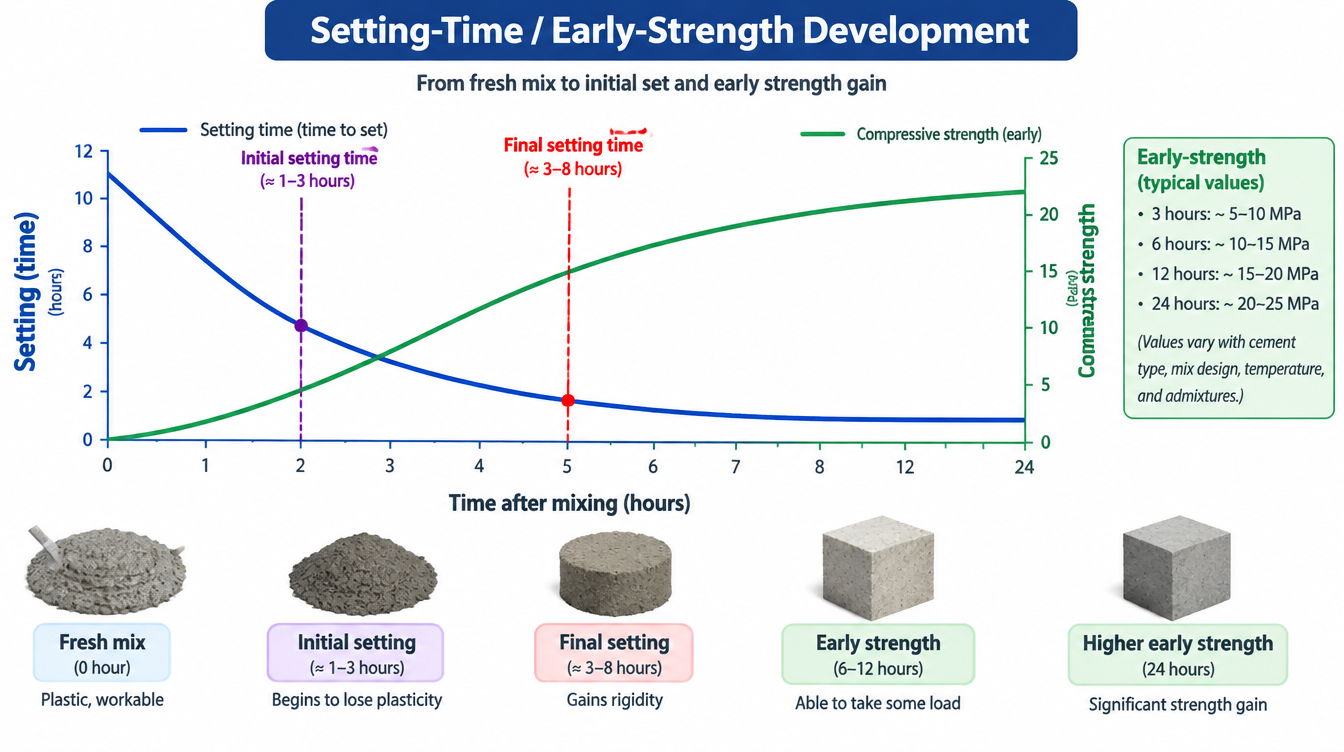
The supplied graphic presents typical/illustrative setting and early-strength values. Actual values vary with cement type, mix design, temperature and admixture system.
FULL
SPECIFICATION
Construction-grade calcium formate specifications reproduced from the supplied technical data sheet.
Batch control: Use the agreed sales specification and batch COA for release. Website values should not replace order-specific quality documentation.
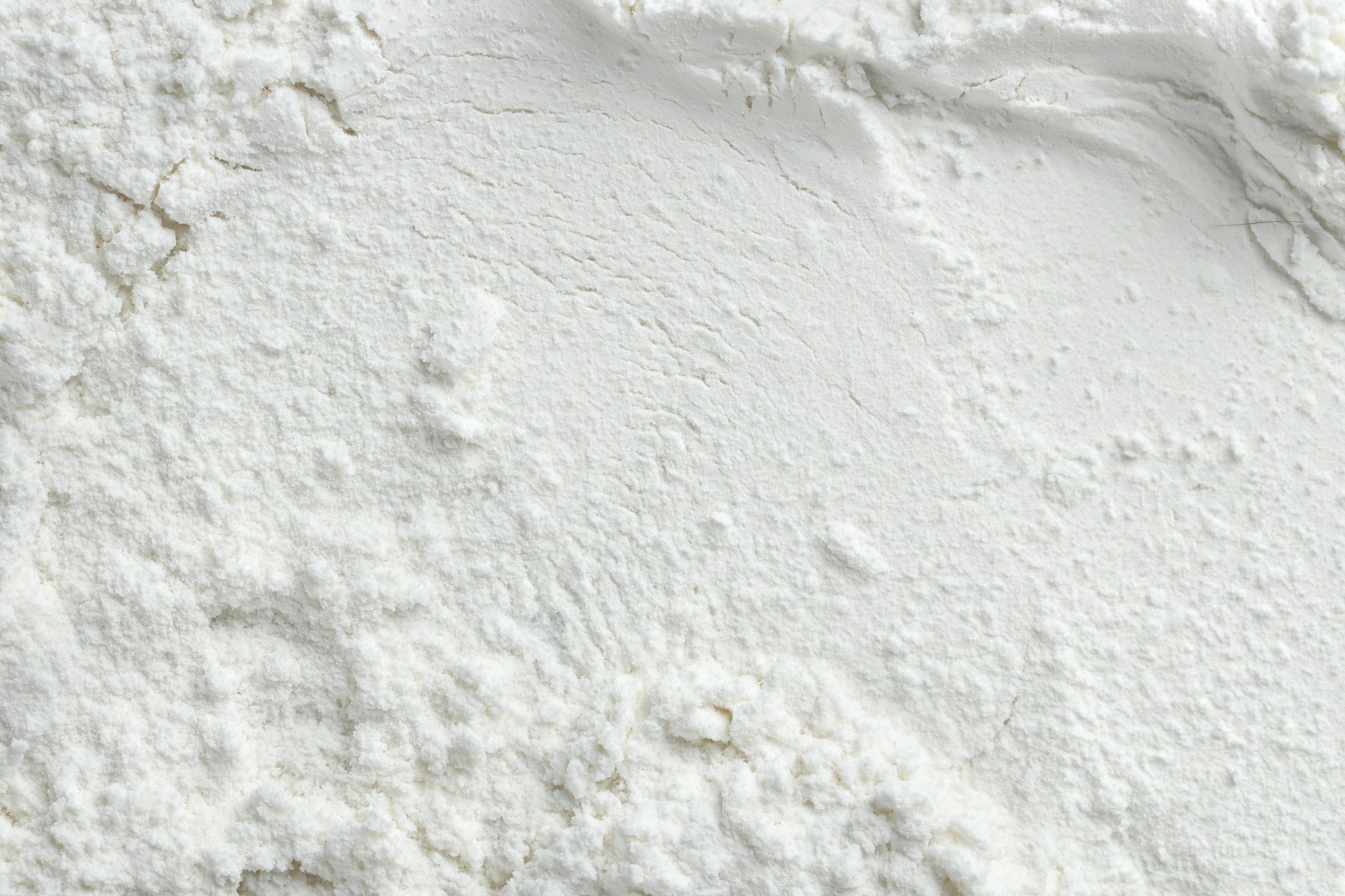
White crystalline powder / granules
| Parameter | Guaranteed Specification | Test Method |
|---|---|---|
| Chemical Formula / Mol. Wt. | Ca(HCOO)₂ · 130.11 g/mol | Theoretical formulation |
| Appearance | White crystalline powder / granules | Visual inspection |
| Assay / Purity · Dry Basis | ≥ 98.0% min | Redox titration / Gravimetry |
| Calcium Content · Ca²⁺ | ≥ 30.2% · typically 30.5% | Complexometric · EDTA |
| Total Formate Content | ≥ 69.0% | Calculated / Titrimetric |
| Moisture · Loss on Drying | ≤ 0.5% max | 105°C oven dry to constant weight |
| Water Insoluble Matter | ≤ 0.3% max | Gravimetric · hot dissolution |
| pH · 10% Aq. Solution, 25°C | 6.5–7.8 · Neutral | Potentiometric pH electrode |
| Chloride · Cl⁻ | ≤ 0.05% · TDS also states <200 ppm | Argentometric / IC |
| Sulfate · SO₄²⁻ | ≤ 0.10% max | Barium sulfate turbidimetry |
| Heavy Metals · as Pb | ≤ 10 mg/kg · ppm | AAS / ICP-OES |
| Bulk Density · Loose / Tapped | 900–1000 / 1100–1200 g/L | ISO 697 Tapped Volumeter |
| Particle Size Distribution | ≥ 95% passing 100 mesh · <150 µm | Dry sieve analysis |
| Solubility in Water · 20°C | ~16.2 g / 100 mL · approx. 162 g/L | Standard dissolution index |
EARLY STRENGTH BUILDS FASTER
Reference compressive-strength evolution at 10°C · CEM I 42.5 R
Graphical recreation of the supplied TDS concept comparing 1.0% calcium formate with a control blend. The source highlights approximately +45% at 24 hours.
Calcium formate compressive strength curve
Reference comparison · 10°C · CEM I 42.5 R
Conceptual curve based on the supplied TDS description. Intermediate values are illustrative, not measured test data.
THE CURVE IS A REFERENCE SYSTEM — NOT A UNIVERSAL GUARANTEE.
Early-strength improvement depends strongly on cement composition, temperature, w/c ratio, accelerator dosage and other admixtures.
Qualification checklist
- Run comparison trials at the intended service temperature.
- Record setting time and compressive strength together.
- Check workability and air content, not only strength.
- Re-qualify whenever cement or dry-mix raw materials change.
CALCIUM FORMATE VS. OTHER ACCELERATOR ROUTES
| Feature / Property | Calcium Formate | Calcium Chloride · CaCl₂ | Triethanolamine · TEA |
|---|---|---|---|
| Corrosion on Rebar | Zero / Non-corrosive | Severe corrosion risk | Non-corrosive |
| Setting Rate Acceleration | High · C₃S promoter | Very High | Moderate |
| Cold Weather Efficacy | Excellent · >0°C | Very High | Low to Moderate |
| Risk of Efflorescence | Reduced · dense matrix | High · hygroscopic salts | Neutral |
| Form Factor | Free-flowing dry powder | Flakes / Granules / Liquid | Viscous liquid |
| Impact on 28-Day Strength | Neutral to Positive · ±5% | Can decrease · -10% | May decrease at high dose |
DOSAGE
CALCULATOR
Convert a dry sodium gluconate dosage percentage into kilograms required for your binder batch. Use this only as a trial-planning tool.
Formula: binder weight × dosage % ÷ 100. Actual optimum dosage must be determined by laboratory trials.
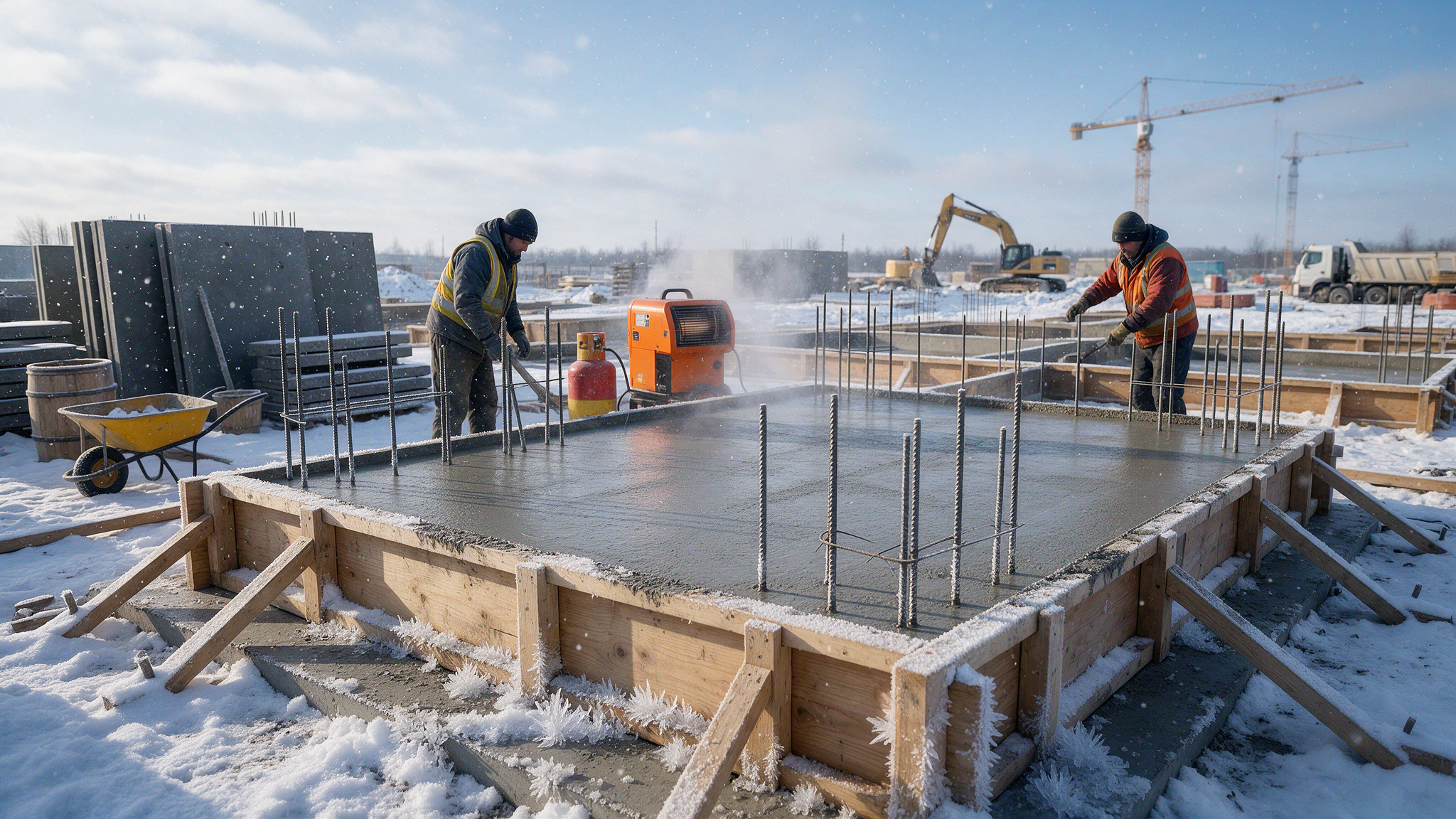
The supplied TDS positions calcium formate for winter concrete and repair mortars below 10°C, with a dosage range of 0.5–2.0% by cement weight and a reported 15–40% increase in 24-hour compressive strength for the referenced system.
Faster early hydration
Helps compensate for the naturally slower cement reaction at lower temperatures.
Earlier strength gain
Useful where demolding, finishing or return-to-service timing is critical.
Not an antifreeze substitute
Acceleration chemistry does not replace proper cold-weather concrete practice, curing and temperature protection.
DESIGNED FOR MODERN DRY-MIX SYSTEMS
The supplied TDS identifies compatibility with PCE superplasticizers, RDP powders and cellulose ethers such as HPMC. Actual formulations should still be checked for set, flow, air, adhesion and strength.
PCE Superplasticizers
Evaluate flow, setting response and early strength in the complete cement system.
RDP Powders
Relevant to polymer-modified tile adhesives, renders and repair mortars.
Cellulose Ethers · HPMC
Check water retention, open time, slip and accelerator response together.
SCMs & Specialty Binders
Re-qualify when slag, fly ash, CSA, CAC or other reactive components are introduced.
DRY POWDER. MOISTURE-PROTECTED SUPPLY.
25 kg Bags
Multi-wall paper bags with PE inner liner according to the supplied TDS.
1000 kg Big Bags
Bulk packaging option specified for larger industrial requirements.
Storage
Keep in original sealed packaging in a cool, dry location and protect from moisture.
Shelf Life
Minimum 24 months from date of manufacture according to the supplied TDS.
FAQ
Practical formulation questions for calcium formate in construction applications.
Need Our Services?
Call: +91 97695 93030
Work Hours
Mon – Sat: 9:00 AM – 6:00 PM IST
Email Us
support@geoconproducts.com