

Engineered aqueous dispersions of discrete amorphous silica nanoparticles for concrete infrastructure. The construction grades are designed for C-S-H nucleation, pore and ITZ refinement, bleed control and early-strength development across floor, grout, RMC, precast, UHPC and shotcrete systems.
SEED THE HYDRATION
DENSIFY THE MATRIX
Colloidal silica supplies ultra-small, non-porous amorphous SiO₂ particles already dispersed in water. In cementitious systems, the particle surface provides high-area nucleation sites and can participate in secondary pozzolanic reaction with free calcium hydroxide.
SELECT SOLIDS &
PARTICLE SIZE BY
APPLICATION
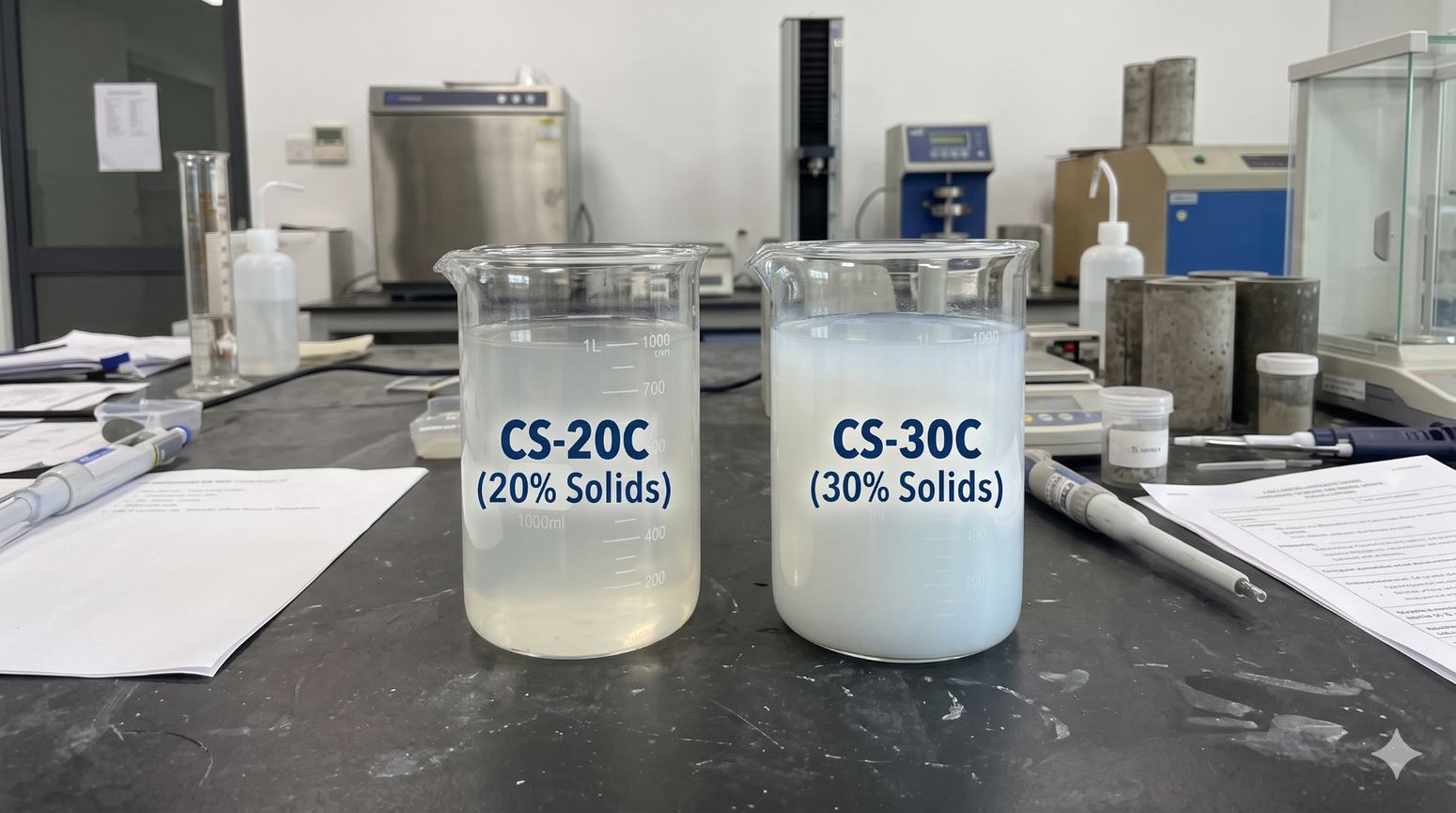
CS-20C is positioned for floor densification and thin penetration. CS-30C is the higher-solids grade for integral concrete, grout, precast, shotcrete and UHPC applications.
CS-20C
Translucent to slightly opalescent nano-silica dispersion optimized in the supplied TDS for concrete-floor densification and deep pore penetration.
CS-30C
Milky opalescent higher-solids grade positioned for RMC, precast, shotcrete, non-shrink grout and high-performance / UHPC systems.
SMALL PARTICLES
HIGH SURFACE REACTIVITY
The supplied construction TDS attributes performance to C-S-H nucleation, ITZ densification, free-water binding and pore penetration, depending on the application.
HOW COLLOIDAL SILICA WORKS
The stabilized silica surface carries silanol functionality and presents a very high external area. In cementitious environments this influences nucleation, packing and secondary reaction.
Disperse instantly
Liquid-borne nanoparticles distribute through mix water without dry-powder deagglomeration.
Seed C-S-H
Nano-surfaces provide nucleation sites that accelerate early C-S-H formation.
Refine ITZ & pores
Ultra-fine particles occupy nano-voids and densify the paste / aggregate transition zone.
React with free lime
Silica can consume Ca(OH)₂ and contribute secondary C-S-H in suitable conditions.
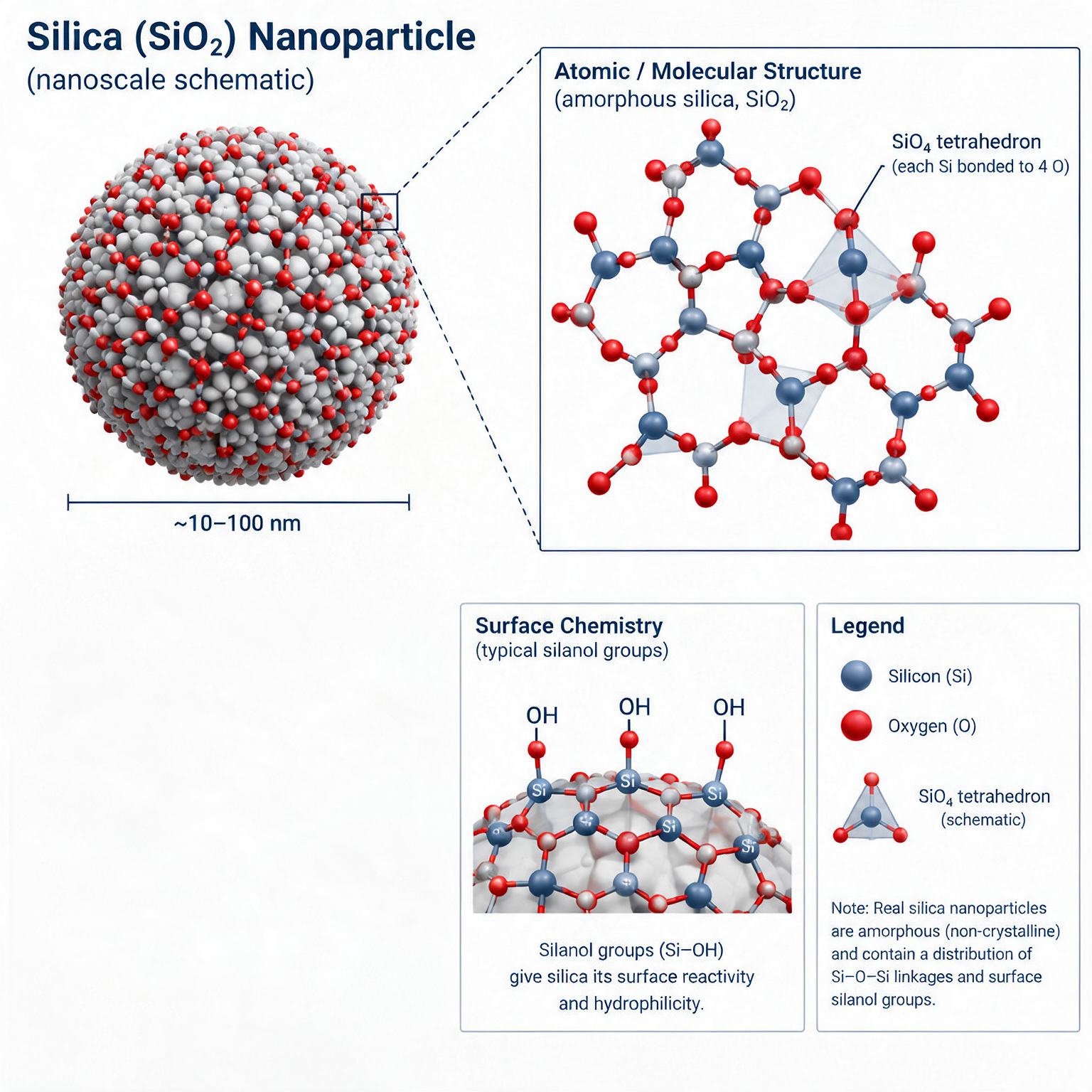
User-supplied nanoscale schematic showing amorphous SiO₂ structure, SiO₄ tetrahedral connectivity and surface silanol groups.
SIX TARGETED
APPLICATION
WINDOWS.
Dosages and primary engineering benefits below are reproduced from the supplied Colloidal Silica Construction TDS.
CS-20C · Topical
Deep pore penetration with the TDS targeting a 50% abrasion boost under ASTM C779 and zero dusting.
CS-30C · Non-Shrink Grouts
TDS positioning: zero bleeding / settlement and early load transfer above 30 MPa in 24 hours.
CS-30C · RMC
Designed to suppress segregation / bleeding and densify ITZ; TDS cites 60–80% reduction in chloride ingress.
CS-30C · Fast Demold
Acts as a C-S-H nucleation seed; TDS cites 30–50% shorter demolding cycles and reduced steam curing.
CS-30C · High Performance
Densifies the ITZ and packs nano-voids; supplied TDS targets strengths above 120–150 MPa.
CS-30C · Wet Mix
TDS positioning: rebound reduction from 20–25% to below 8% with single-pass build-up up to 150 mm.
RMC. PRECAST. SHOTCRETE.FLOORS.


FULL
SPECIFICATION
Construction-grade liquid specifications reproduced from the supplied Colloidal Silica TDS.
Product chemistry: Aqueous amorphous SiO₂. Grade range: 20% and 30% active solids. Both grades are specified as chloride-free at <0.01% chloride.
CS-20C and CS-30C colloidal silica
| Parameter | CS-20C · 20% Solids | CS-30C · 30% Solids | Standard / Method |
|---|---|---|---|
| Active SiO₂ Content | 20.0% ±1.0% | 30.0% ±1.0% | ISO 3251 / Gravimetric |
| pH · 25°C | 9.2–10.2 | 9.5–10.5 | ASTM E70 |
| Average Particle Diameter · d50 | 8–12 nm | 12–18 nm | DLS / TEM Analysis |
| Specific Surface Area · BET | 260–330 m²/g | 180–240 m²/g | Sears Titration / BET N₂ |
| Specific Gravity · 20°C | 1.12–1.14 g/cm³ | 1.20–1.22 g/cm³ | ASTM D1475 / Hydrometer |
| Viscosity · 25°C, LV #1, 60 rpm | <6.0 mPa·s · cP | <10.0 mPa·s · cP | Brookfield / ASTM D2196 |
| Stabilizing Ion System | Sodium · Na₂O ≤0.40% | Sodium · Na₂O ≤0.50% | Flame Photometry / ICP |
| Chloride Content | <0.01% · Chloride-free | <0.01% · Chloride-free | EN 480-10 |
| Appearance | Translucent / slight opalescent | Milky opalescent liquid | Visual observation |
| Primary Application | Floor densifiers / thin penetration | RMC / Precast / Shotcrete / UHPC | Engineered specification |
EARLY C-S-H SEEDING.
FASTER STRENGTH KINETICS
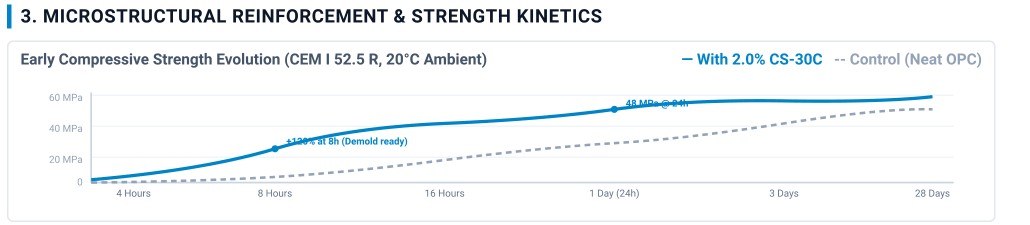
Early Compressive Strength Evolution · CEM I 52.5 R · 20°C
This is the exact graph extracted from page 2 of the supplied TDS. It compares 2.0% CS-30C with a neat OPC control.
8-Hour Strength Index
The TDS explicitly states +120% at 8 hours. The normalized graph below therefore uses Control = 100 and CS-30C = 220 without inventing undisclosed MPa values.
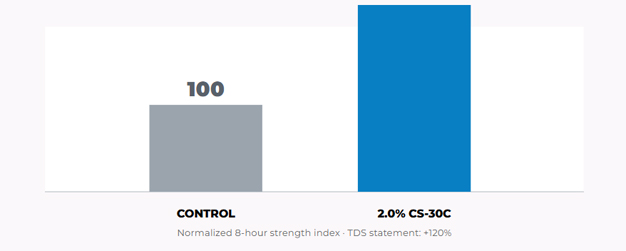
+120% at 8 hours
The supplied TDS labels the 8-hour CS-30C point as +120% versus control and “Demold ready”.
48 MPa at 24 hours
The TDS graph labels the CS-30C curve at 48 MPa at 1 day / 24 hours.
Precast demolding
TDS technical breakdown: demolding schedules can shorten from 16 hours to 6–8 hours at ambient temperature.
Non-shrink grout
TDS dosage guide targets early load transfer above 30 MPa in 24 hours.
DEDUCT THE WATER
BROUGHT BY THE DISPERSION
The supplied TDS states that CS-30C contains 70% water and CS-20C contains 80% water. Deduct this from gauging water to maintain the target water/cement ratio.
*For practical batching, 1 kg water ≈ 1 L. Add colloidal silica alongside or immediately after PCE superplasticizer for rapid dispersion, as stated in the TDS.
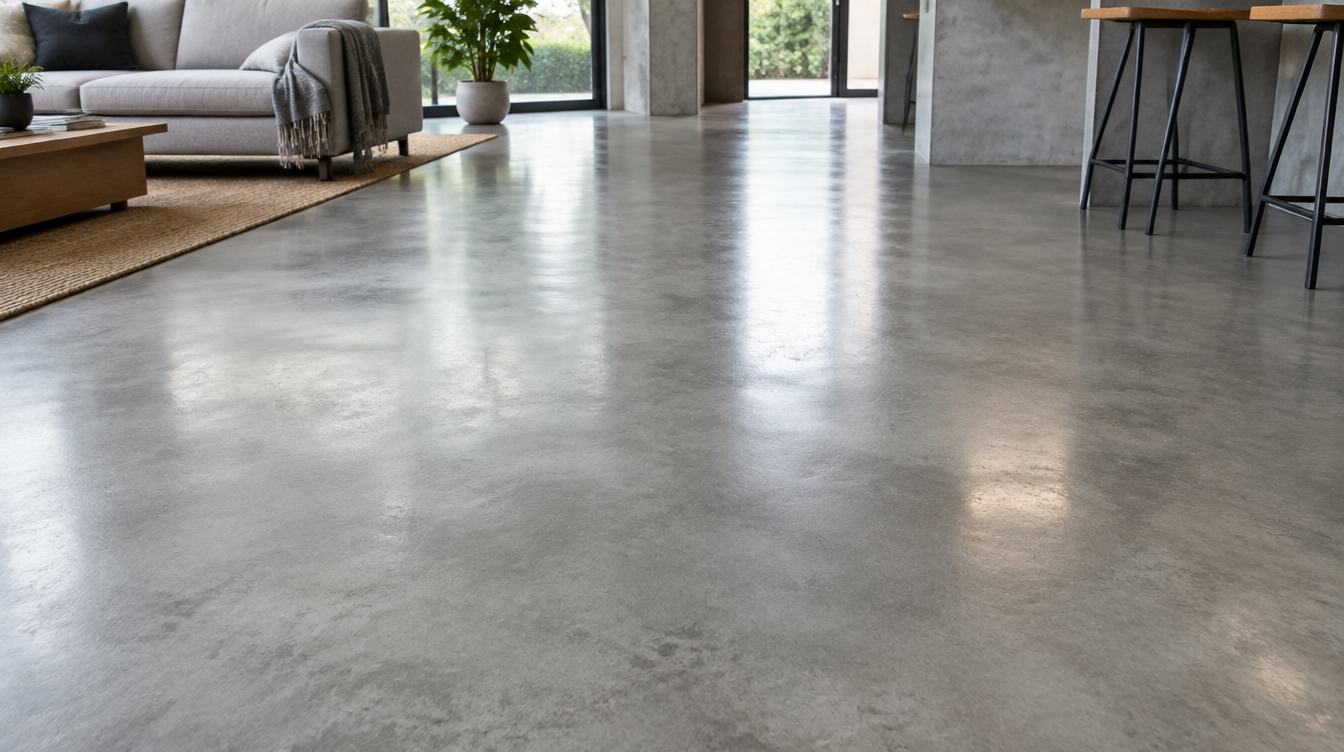
DEEP PENETRATION FOR CONCRETE FLOOR DENSIFICATION.
For floor densification, the TDS positions the smaller 8–12 nm CS-20C particles for deep capillary-pore penetration and conversion of free lime into secondary C-S-H.
Coverage
8–12 m²/L topical spray according to the supplied dosage guide.
Abrasion
TDS target: 50% abrasion improvement under ASTM C779.
Dust proofing
Designed to improve surface hardness and eliminate dusting in the referenced system.
Polish
TDS technical breakdown positions the system for high-gloss polish without efflorescence.
FAQ
Practical questions for colloidal nano-silica
in construction applications.
Need Our Services?
Call: +91 97695 93030
Work Hours
Mon – Sat: 9:00 AM – 6:00 PM IST
Email Us
support@geoconproducts.com