

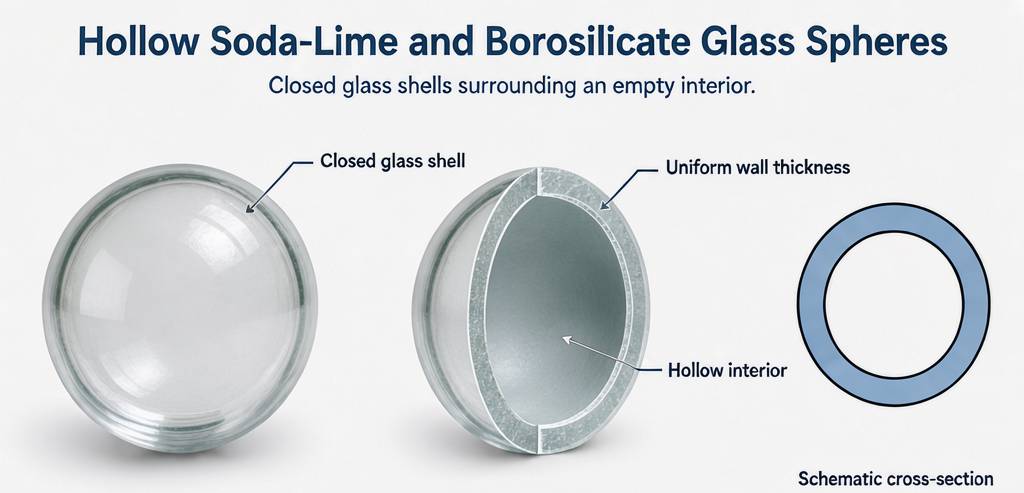
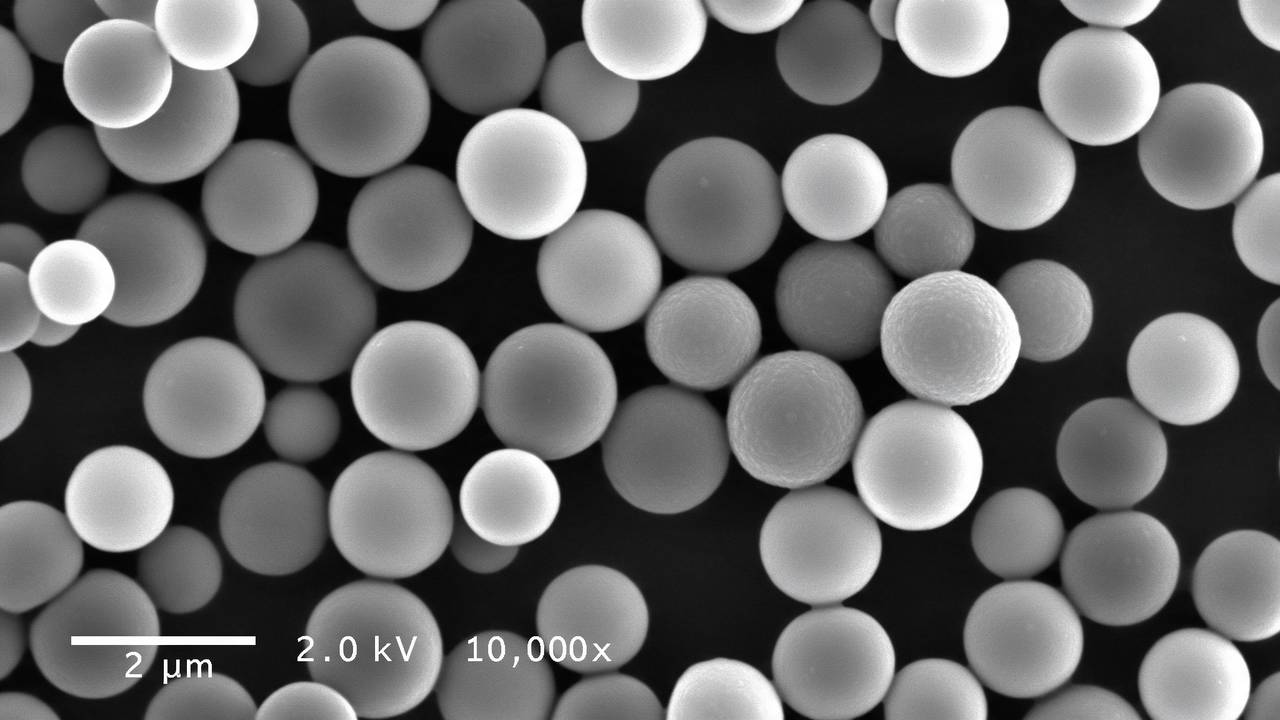
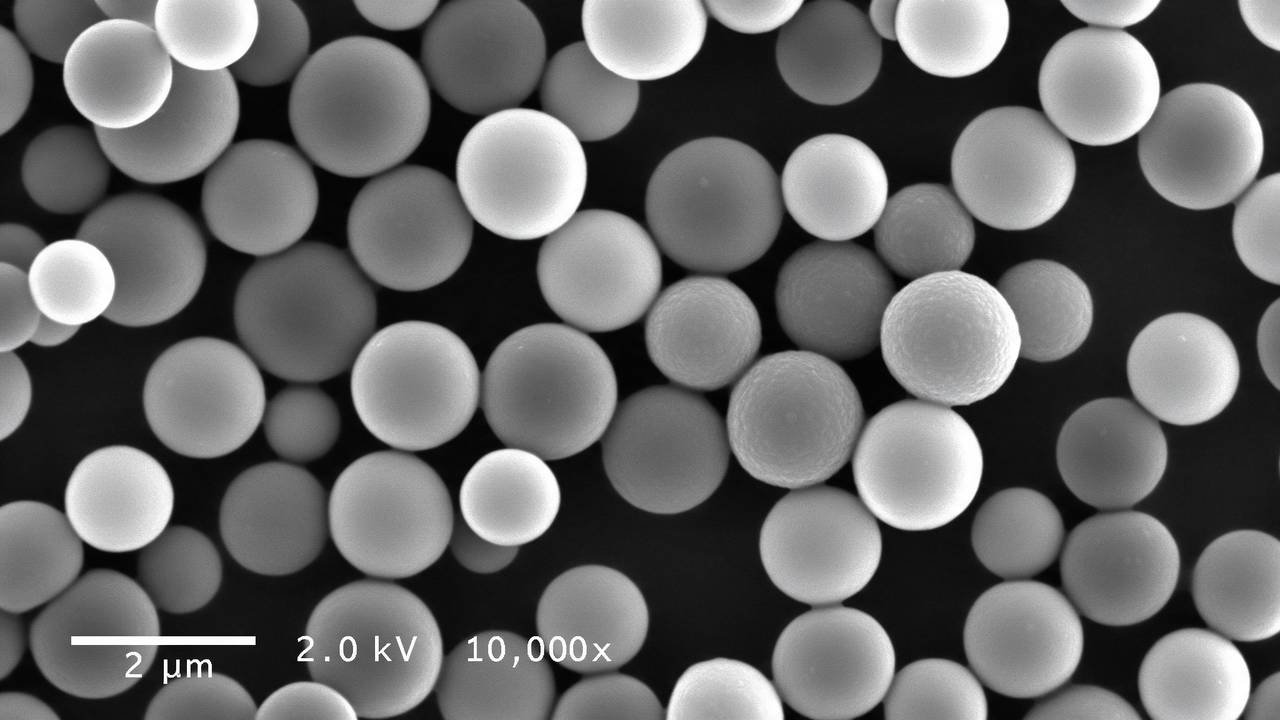
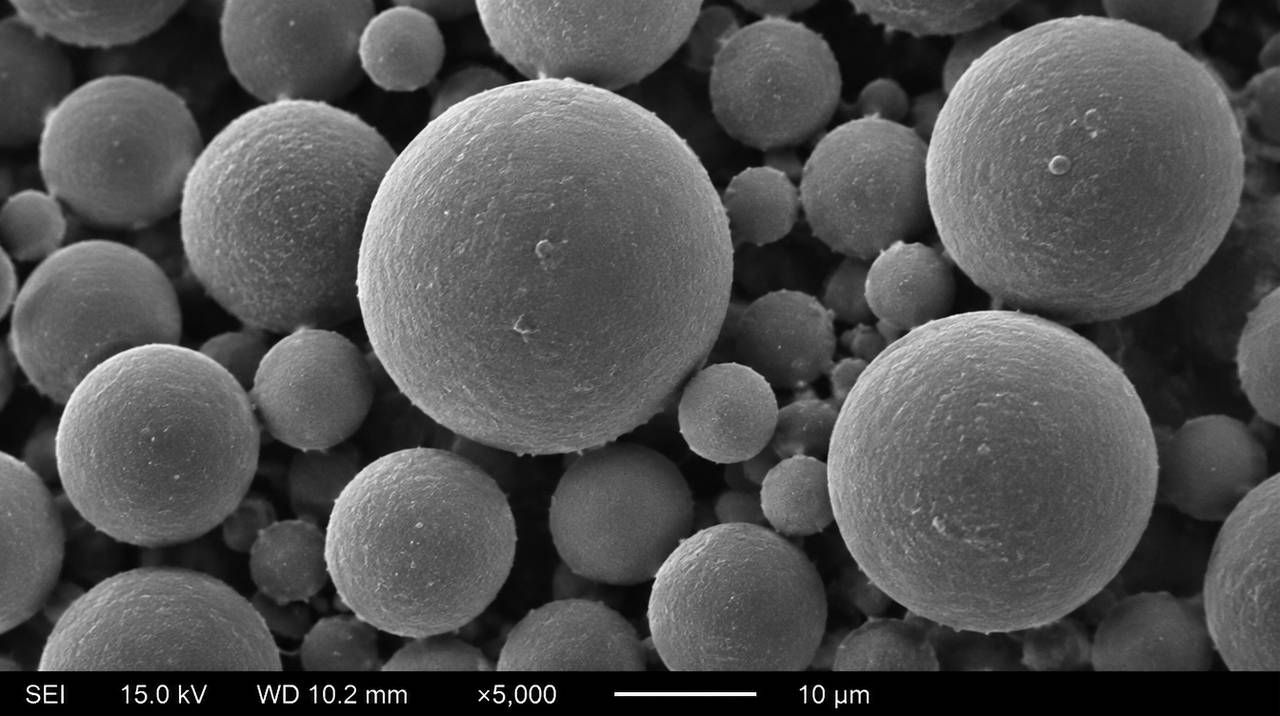
Engineered water-insoluble, chemically stable hollow soda-lime borosilicate glass spheres. Their closed-shell structure provides ultra-low density for lightweighting while grade selection balances particle size, thermal performance and mechanical survivability.
WEIGHT-REDUCTION ENGINE
Closed glass shells surround an empty interior. A stronger shell increases survivability, while a thinner/lower-density shell maximizes lightweighting.
WHY THE SPHERE MATTERS
Closed shell
Creates low density without open-pore water absorption.
Rounded geometry
Supports smooth flow and reduced internal friction.
High volume per kilogram
Enables volume replacement of much heavier mineral fillers.
Grade-specific strength
Higher-pressure processes require stronger microsphere grades.
FOUR GRADES.
FOUR JOB
WINDOWS.
Grade roles follow the supplied construction TDS. Select the appropriate hollow glass microsphere grade based on density, crush strength, particle size and processing requirements.
K15
Spackling, joint compounds, thermal dry-mix plasters and cool-roof coatings.
- Crush strength 300 psi
- Particle size · d50 ~60 µm
- Processing Low shear
S28HS
Lightweight C2TE tile adhesives, acoustic underlayment screeds and sealants.
- Crush strength 3,000 psi
- Particle size · d50 ~30 µm
- Processing Medium shear
K37
Precision grouts, syntactic mortars, lightweight terrazzo and moldings.
- Crush strength 3,000 psi
- Particle size · d50 ~45 µm
- Processing Medium shear / grout
iM16K
Structural UHPC, precast GFRC and high-pressure wet shotcrete.
- Crush strength 16,000 psi
- Particle size · d50 ~20 µm
- Processing High-pressure pumping
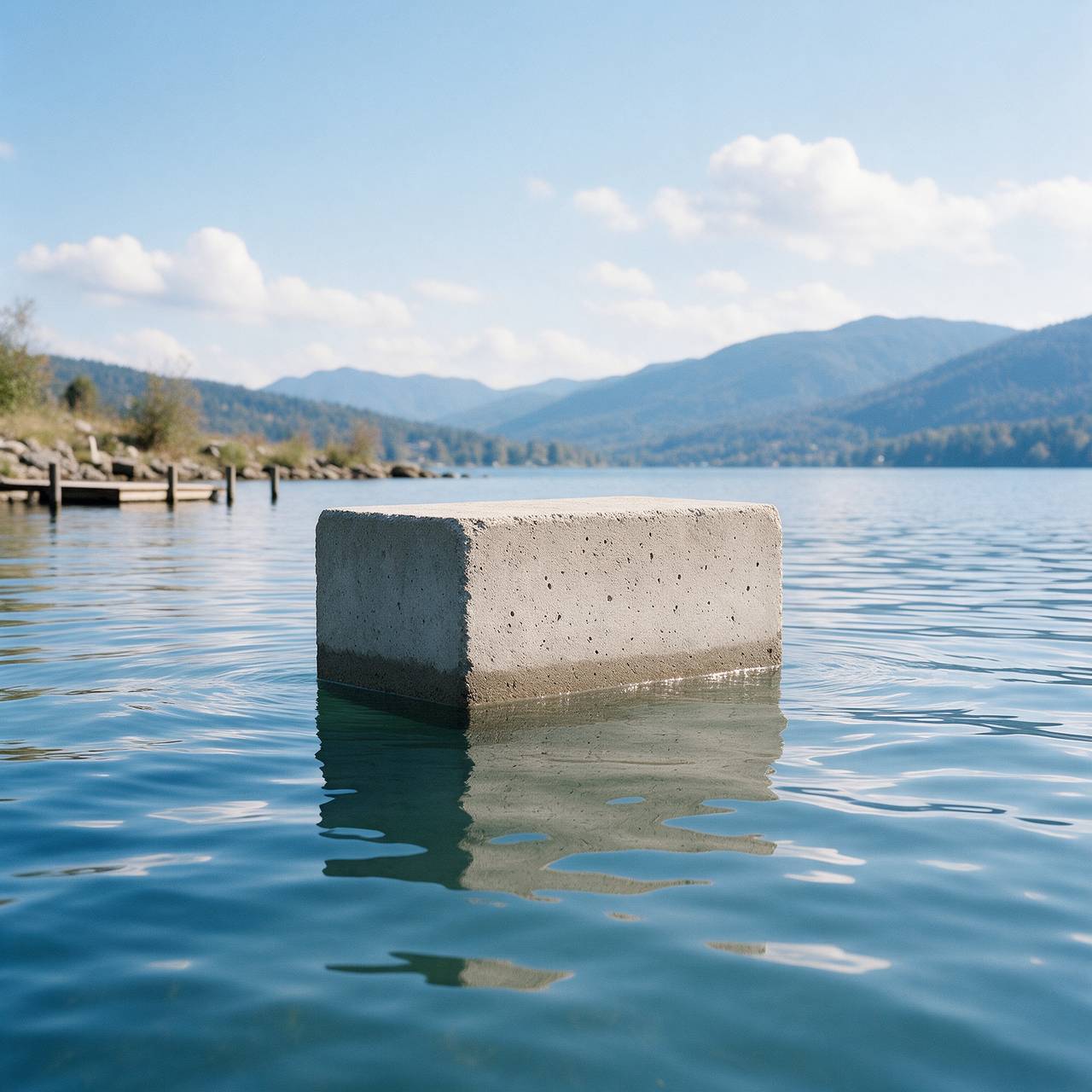
LIGHTWEIGHTING WITHOUT LOSINGFUNCTION

FULL TECHNICAL
DATA
Values from the supplied construction TDS.
Selection rule: Lower density maximizes lightweighting; higher crush strength increases process survivability. The grade must survive mixing, pumping and placement.
Hollow Glass Microspheres
| Parameter | K15 | S28HS | K37 | iM16K |
|---|---|---|---|---|
| True Density | 0.15 g/cm³ | 0.28 g/cm³ | 0.37 g/cm³ | 0.46 g/cm³ |
| Bulk Density | 0.08–0.10 g/cm³ | 0.15–0.18 g/cm³ | 0.20–0.24 g/cm³ | 0.26–0.30 g/cm³ |
| Isostatic Crush | 300 psi | 3,000 psi | 3,000 psi | 16,000 psi |
| Survival at Test Pressure | 80% min | 90% min | 80% min | 90% min |
| Median Particle Size | ~60 µm | ~30 µm | ~45 µm | ~20 µm |
| Thermal Conductivity | ~0.055 W/(m·K) | ~0.085 W/(m·K) | ~0.105 W/(m·K) | ~0.145 W/(m·K) |
| Dielectric Constant | 1.2 | 1.4 | 1.6 | 1.8 |
| Hardness | 5–6 Mohs | 5–6 Mohs | 5–6 Mohs | 5–6 Mohs |
| Softening Temperature | >600°C | >600°C | >600°C | >600°C |
| Color | White · L>90 | White · L>90 | White · L>90 | White · L>90 |
| Moisture Absorption | <0.5% | <0.5% | <0.5% | <0.5% |
| Processing | Low shear | Medium shear | Medium shear / grout | High-pressure pumping |
THE ENGINEERING
TRADE-OFF
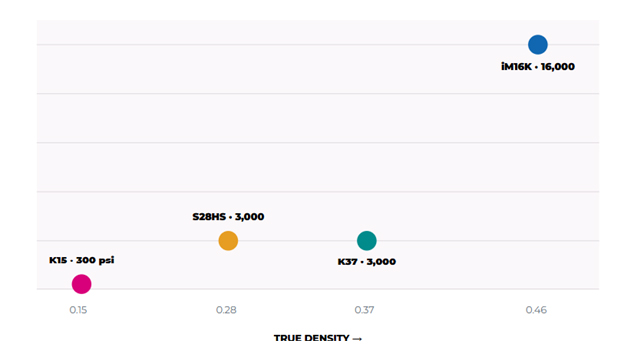
K15
Maximum lightweighting
S28HS
Balanced performance
K37
General construction
iM16K
High-pressure processing
APPLICATION DOSAGE WINDOWS
Tile Mortars
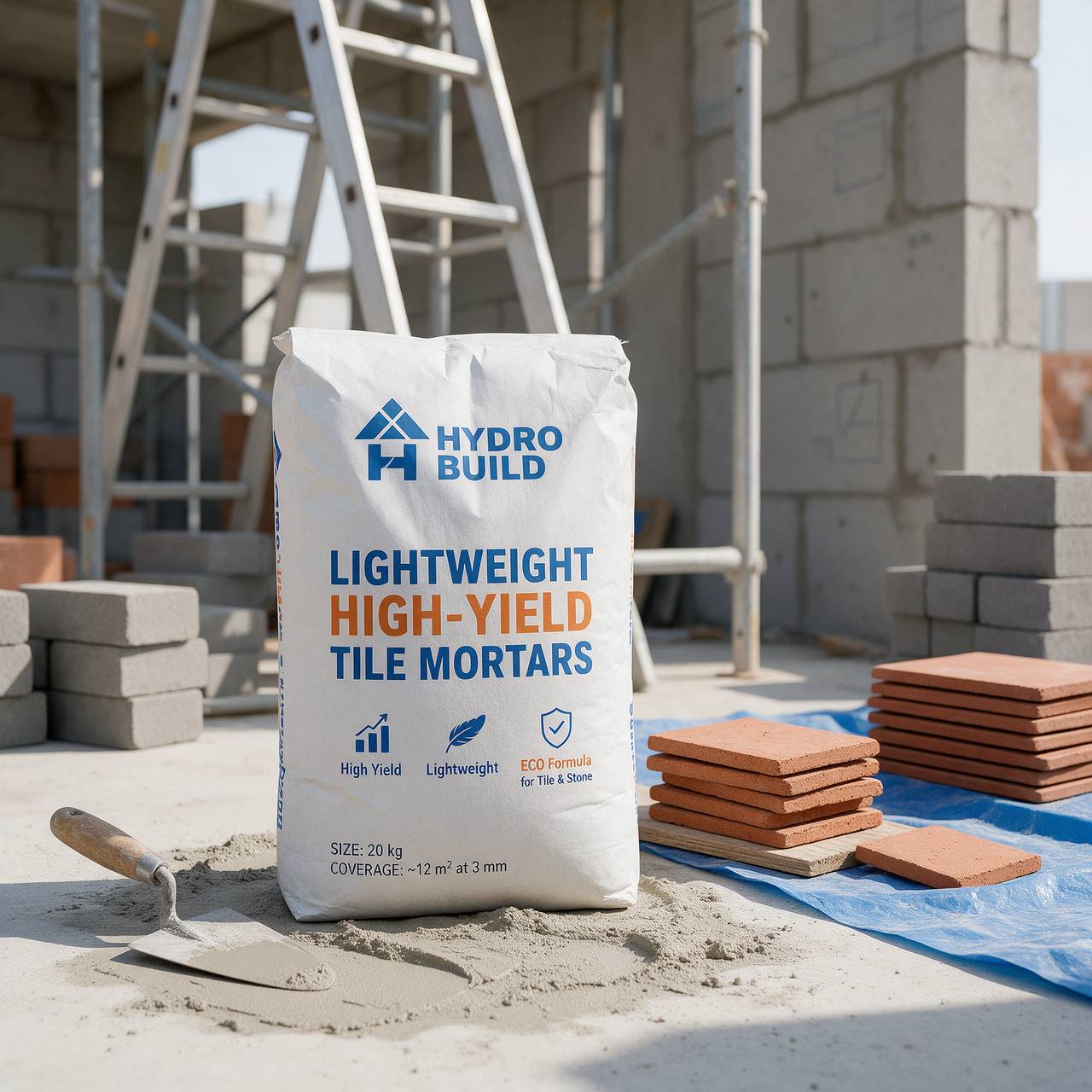
TDS target: lighter bags, non-sag slip resistance and trowel glide.
Thermal Plasters
Low-density thermal plaster and render systems.
Spackle & Putty
Deep-crack filling and easy sanding.
Cool-Roof Coatings
High solar reflectance and insulation concepts.
Precision Grouts
Low-density smooth machine-flow grouts.
UHPC & Precast
High-pressure pumping and structural lightweighting.
SPHERICAL PARTICLES.
LOW-DENSITY VOLUME.
REPLACE SAND BY
VOLUME, NOT WEIGHT
The supplied TDS uses 2.65 g/cm³ for quartz sand and provides the formula used in this calculator.
kg microspheres = kg sand replaced × (bubble density ÷ 2.65)
PROTECT THE SPHERES THROUGH THE
PROCESS PATH
Add Late
Introduce microspheres at the final blending phase.
Control Shear
Use low-shear ribbon/paddle mixing and avoid unnecessary high-speed choppers.
Match Pumping
TDS guidance distinguishes low/medium-shear grades from iM16K high-pressure pumping.
Validate Survival
Confirm intact particle survival in the actual plant and field process.
FAQ
Need Our Services?
Call: +91 97695 93030
Work Hours
Mon – Sat: 9:00 AM – 6:00 PM IST
Email Us
support@geoconproducts.com