

Two complementary liquid polymer technologies for construction systems. PAM inverse emulsion builds cohesive yield stress for anti-washout, SCC and anti-bleed control, while PEO dispersion is positioned as a non-ionic pumping aid for wall-slip lubrication, drag reduction and smooth trowel glide.
CONTROL THE MIX CONTROL THE FLOW PATH
The TDS separates the product family into two functional roles: PAM is built around ultra-high chain extension and cohesive network formation; PEO is built around non-ionic polyether behavior at the pipe wall and under high-shear pumping.
PAM BUILDS COHESION.
PEO REDUCES DRAG.
Both products are supplied as pumpable liquid rheology modifiers, but their chemistry, ionic behavior and primary engineering targets are different.
PARTIALLY HYDROLYZED POLYACRYLAMIDE
Milky white pumpable inverse emulsion designed for high yield stress, anti-washout and anti-bleed performance.
POLYETHYLENE / POLYOLEFIN OXIDE POLYETHER
Off-white to pale cream fluid suspension designed for friction drag reduction, pumping lubricity and non-sticky trowel glide.
CHAIN BRIDGING VS
BOUNDARY WALL-SLIP
The mechanism language below follows page 2 of the supplied TDS.
HOW THE TWO POLYMERS ACT
Two liquid polymer forms with different mechanisms for controlling cohesion, water retention and pumping friction.
PAM inversion mechanism
Upon water contact, ultra-long polyacrylamide chains bridge cement grains through Ca²⁺ ionic links and lock water plus aggregate into a cohesive network that resists washout shear.
PEO boundary wall-slip
Flexible non-ionic polyether coils align along pipeline walls, suppress turbulent micro-eddies and create a low-friction boundary layer for harsh crushed-sand pumping.
Shear-thinning response
Both systems are designed to reduce apparent viscosity as shear increases, but PAM retains higher low-shear structure while PEO emphasizes high-shear pipeline lubrication.
Admixture compatibility
The TDS states compatibility with PCE, SNF and lignosulfonate plasticizers.
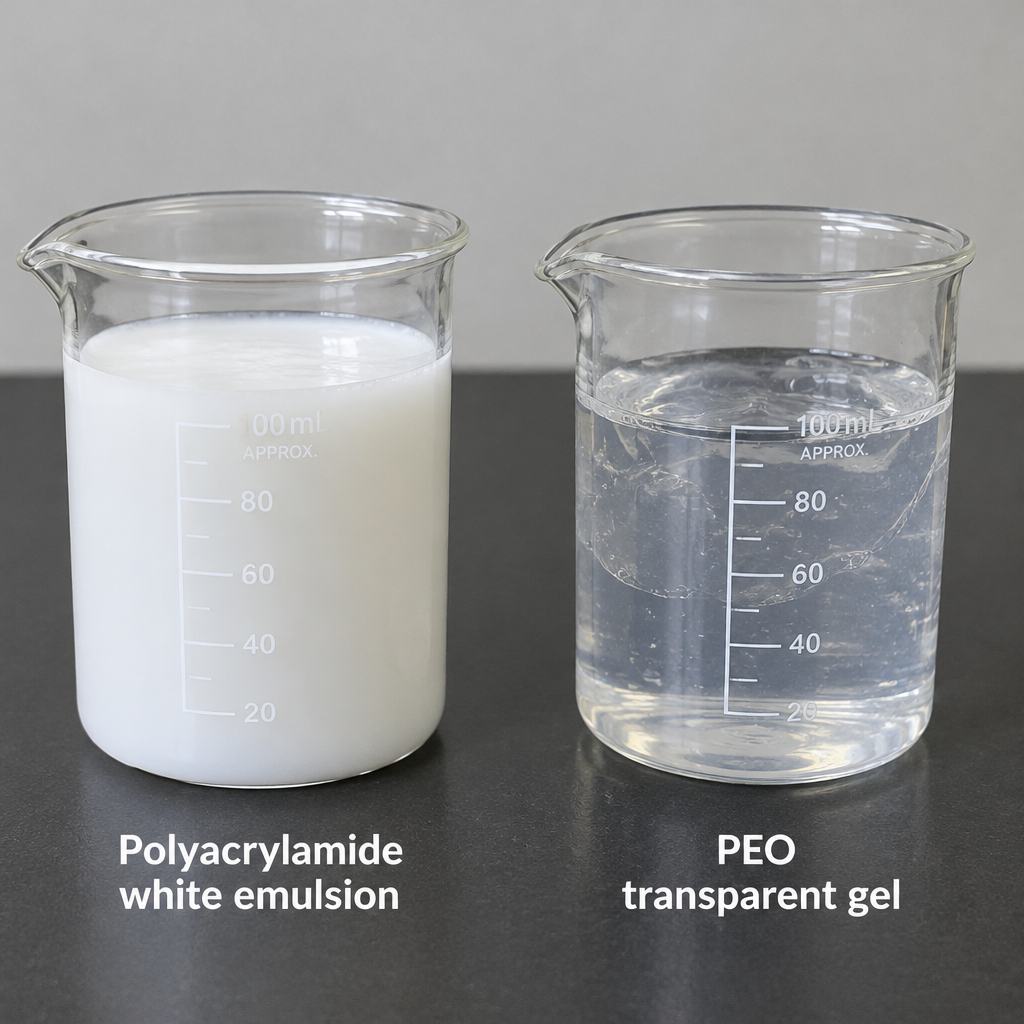
Two liquid polymer forms
PAM white emulsion for cohesive network formation and PEO non-ionic aqueous dispersion / gel-forming system for boundary wall-slip and pumping lubrication.
SIX TARGETED
APPLICATION
WINDOWS.
Dosages and engineering targets below are taken from the supplied TDS.
Underwater Tremie Pours
Target: washout mass loss below 5.0% under CRD-C 61 and zero turbidity plume in water.
Self-Consolidating Concrete
Designed to maintain 650–750 mm slump-flow without bleeding or aggregate sag.
High-Boom & Long-Line Pumping
TDS target: 25–40% reduction in boom-line pressure with lubrication of harsh M-sand mixes.
Wet-Mix Shotcrete
TDS positioning: reduce rebound from 25% to below 8% and support greater than 150 mm single overhead pass.
3D Mortar Printing & Plasters
Designed for high green strength, zero nozzle tear and silky non-sticky troweling.
Non-Shrink Cable Grouts
Target: zero wick-induced bleed under EN 445 and 100% void-free tendon-duct filling.
FROM MIXER DRUM TO HIGH-RISE BOOM LINE

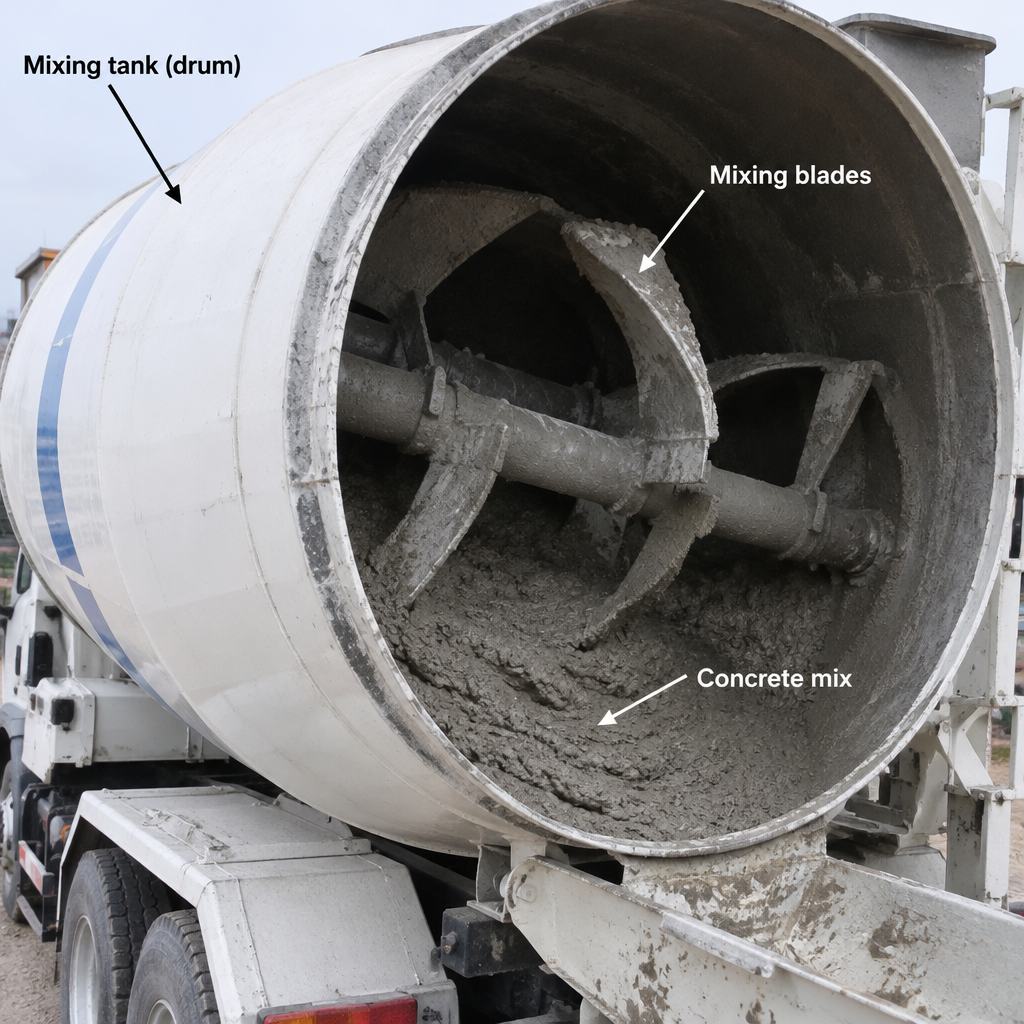
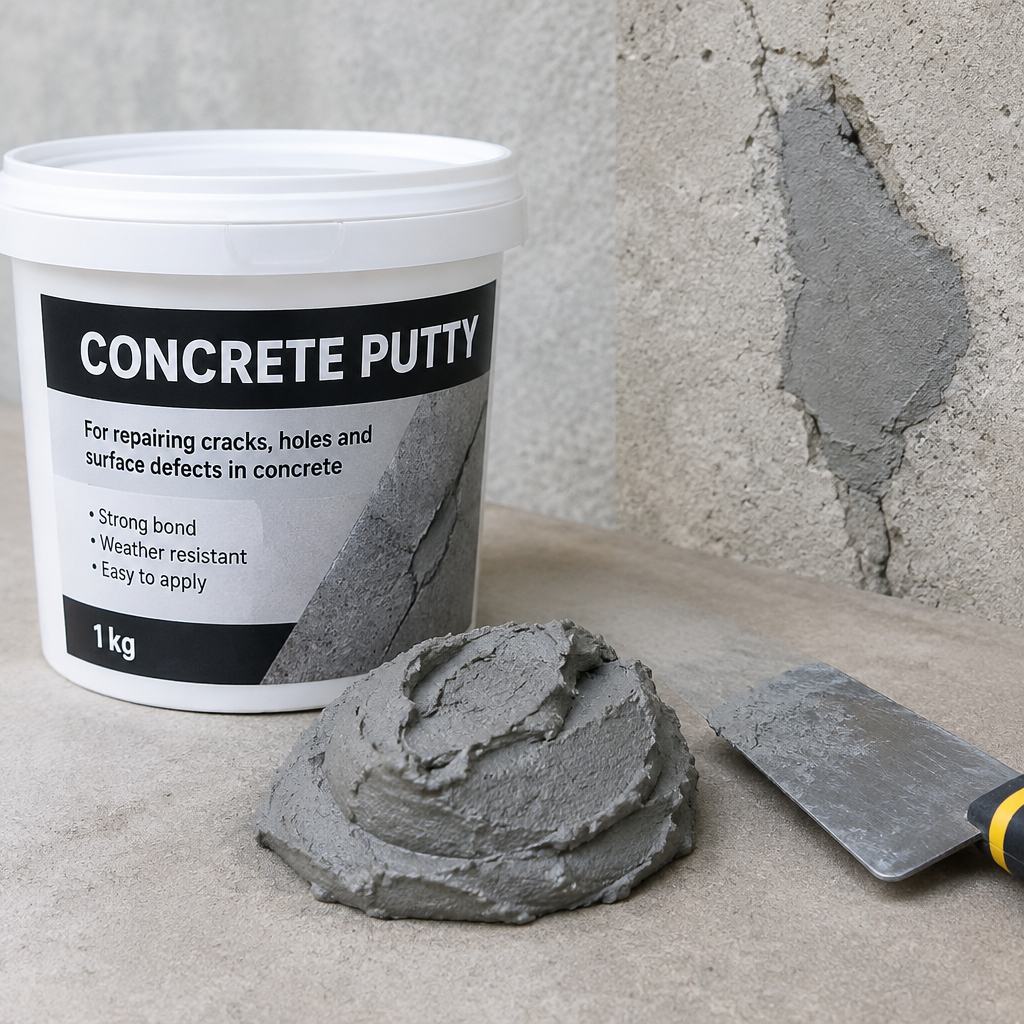
FULL
TECHNICAL DATA
PAM and PEO values reproduced from the supplied TDS.
Core distinction: PAM is the yield-stress / anti-washout / anti-bleed tool. PEO is the non-ionic friction-reduction / pumping-lubricity tool.
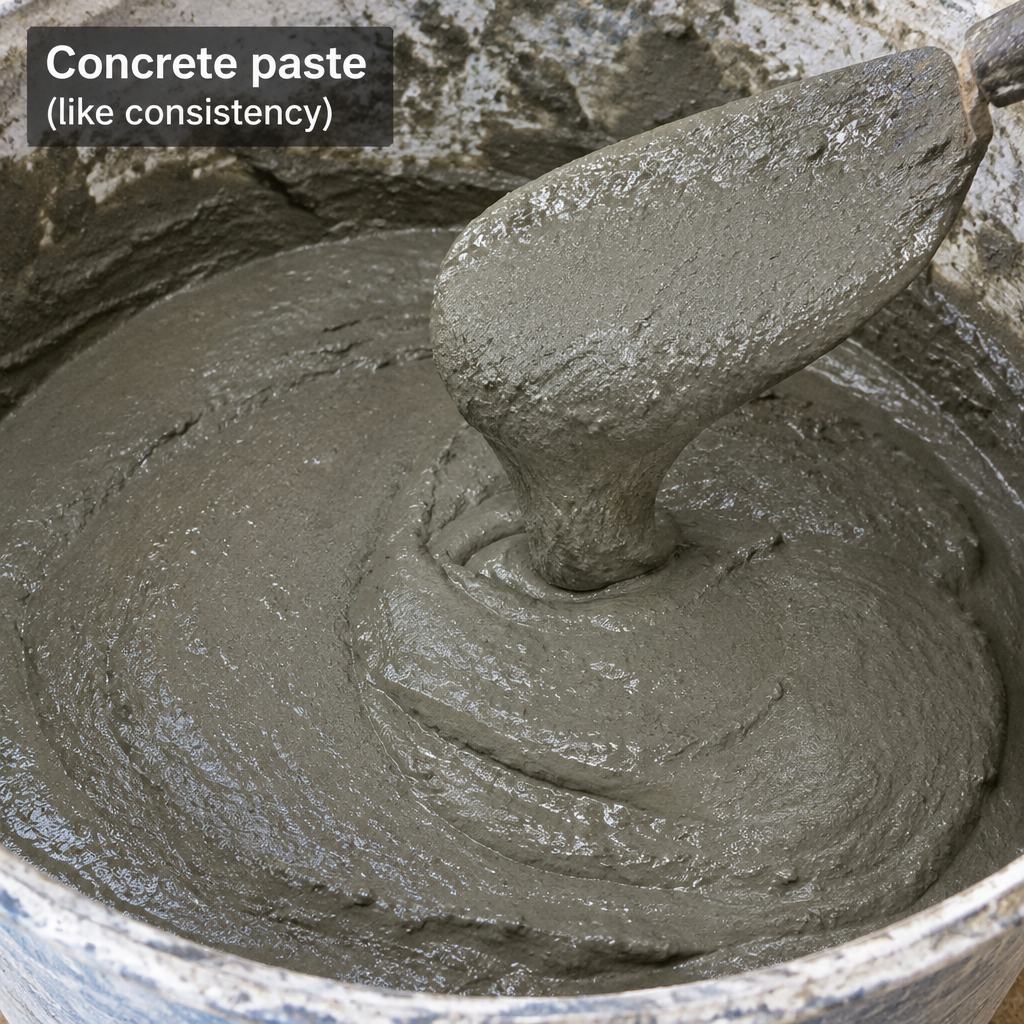
Concrete paste consistency
| Technical Parameter | PAM Inverse Emulsion · HPAM | PEO Dispersion · Polyolefin Oxide |
|---|---|---|
| Chemical Nature | Partially Hydrolyzed Polyacrylamide | Polyethylene / Polyolefin Oxide Polyether |
| Physical Appearance | Milky white, pumpable inverse emulsion | Off-white to pale cream fluid suspension |
| Active Polymer Solids | 30.0–40.0 wt% | 20.0–28.0 wt% |
| Molecular Weight · Mw | 15–25 million Daltons · ultra-high | 4.0–8.0 million Daltons |
| Ionic Charge & Hydrolysis | Anionic · 15–30 mol% carboxylate | 100% non-ionic · zero charge / salt-immune |
| Specific Gravity · 20°C | 1.02–1.08 g/cm³ | 1.05–1.12 g/cm³ |
| Bulk Viscosity · 25°C | 800–2,500 mPa·s · RVT #3 @ 20 rpm | 1,500–3,500 mPa·s · RVT #4 @ 20 rpm |
| Inversion / Dissolution | Self-inverting in mix water <45 sec | Completely water-soluble <90 sec |
| Flash Point / Freeze Stability | >100°C / stable down to −10°C · 3 cycles | >100°C / protect strictly from freezing · >0°C |
| Chloride Content | <100 ppm · chloride-free | <100 ppm · chloride-free |
| Primary Functional Target | Yield stress · anti-washout · anti-bleed | Friction drag reduction · pumping lubricity |
FLOW UNDER SHEAR.
PRESSURE UNDER PUMPING.
Apparent Viscosity vs. Shear Rate
Extracted directly from page 2 of the supplied TDS. The chart shows PAM retaining the highest low-shear yield structure, while PEO trends toward low wall-slip drag at high shear.

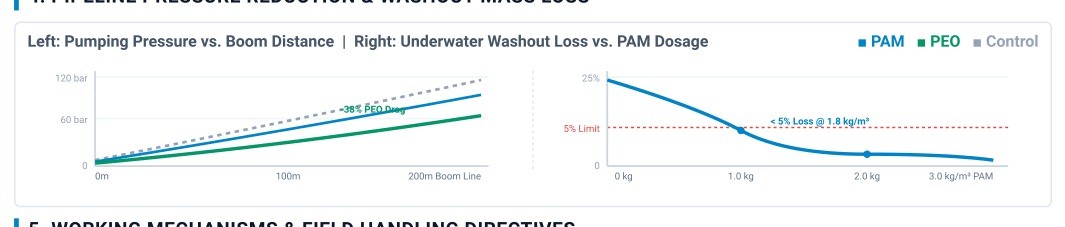
Pipeline Pressure Reduction & Underwater Washout
Extracted directly from page 2 of the supplied TDS. PEO is shown reducing boom-line pressure, while PAM dosage reduces underwater washout toward the stated 5% limit.
PEO drag reduction
The TDS chart highlights approximately −38% drag at the long boom-line condition shown.
PAM washout control
The TDS chart identifies less than 5% washout loss at 1.8 kg/m³ PAM.
PAM at rest
High low-shear structure supports anti-washout and anti-bleed behavior.
PEO under pumping
Boundary-layer behavior targets lower pipeline friction at high shear.
STORE, AGITATE & DOSE CORRECTLY
PAM Moisture Protection
Protect PAM drums strictly from moisture ingress. The TDS warns that water entering the drum can cause localized inversion and an unpumpable gel skin.
PAM Pump Selection
Use low-shear peristaltic or diaphragm pumps according to the TDS handling directive.
PEO Freeze Protection
Protect PEO strictly from freezing; the specification calls for storage above 0°C.
PEO Recirculation
After prolonged storage beyond three months, use gentle recirculation or paddle agitation.
Batching Sequence
Co-dose PEO with batch gauging water or immediately after the primary plasticizer.
FAQ
Practical questions based on the supplied PAM & PEO construction TDS.
Need Our Services?
Call: +91 97695 93030
Work Hours
Mon – Sat: 9:00 AM – 6:00 PM IST
Email Us
support@geoconproducts.com