EXPLORAX Oilfield Chemical Technology
Oil & gas production chemicals · technical guide
Demulsifiers

Break persistent crude-oil emulsions, accelerate water drop and improve the quality of both separated phases with a treatment program matched to the field fluid.

The separation challenge

Why crude oil holds water

Production, pumping and pressure changes mix formation water into crude. Natural interfacial materials such as asphaltenes and resins, together with fine solids, can stabilize small droplets. The resulting emulsion may persist long enough to overload separation equipment or leave excess water and dissolved salts in export oil.

Demulsifiers

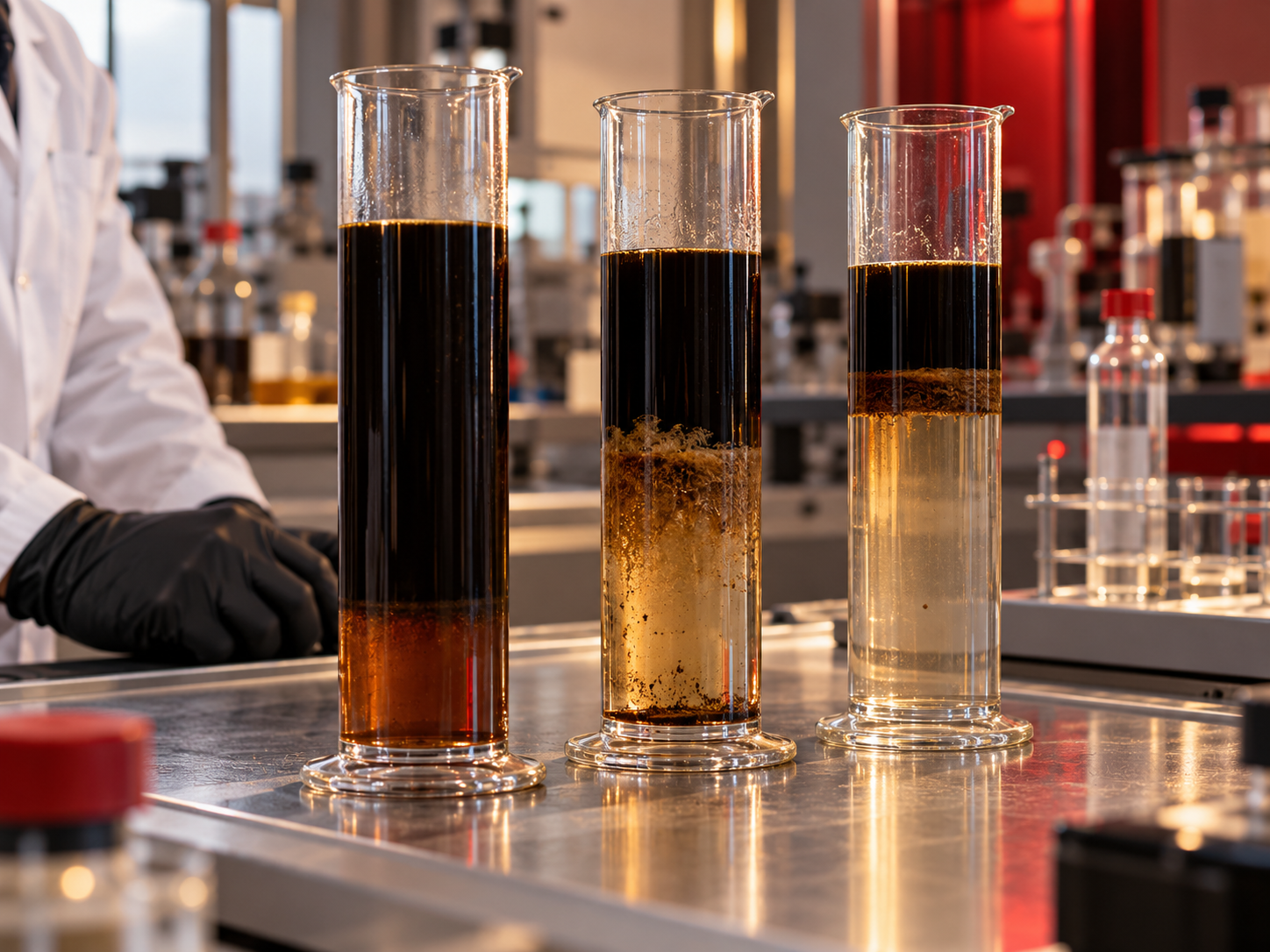
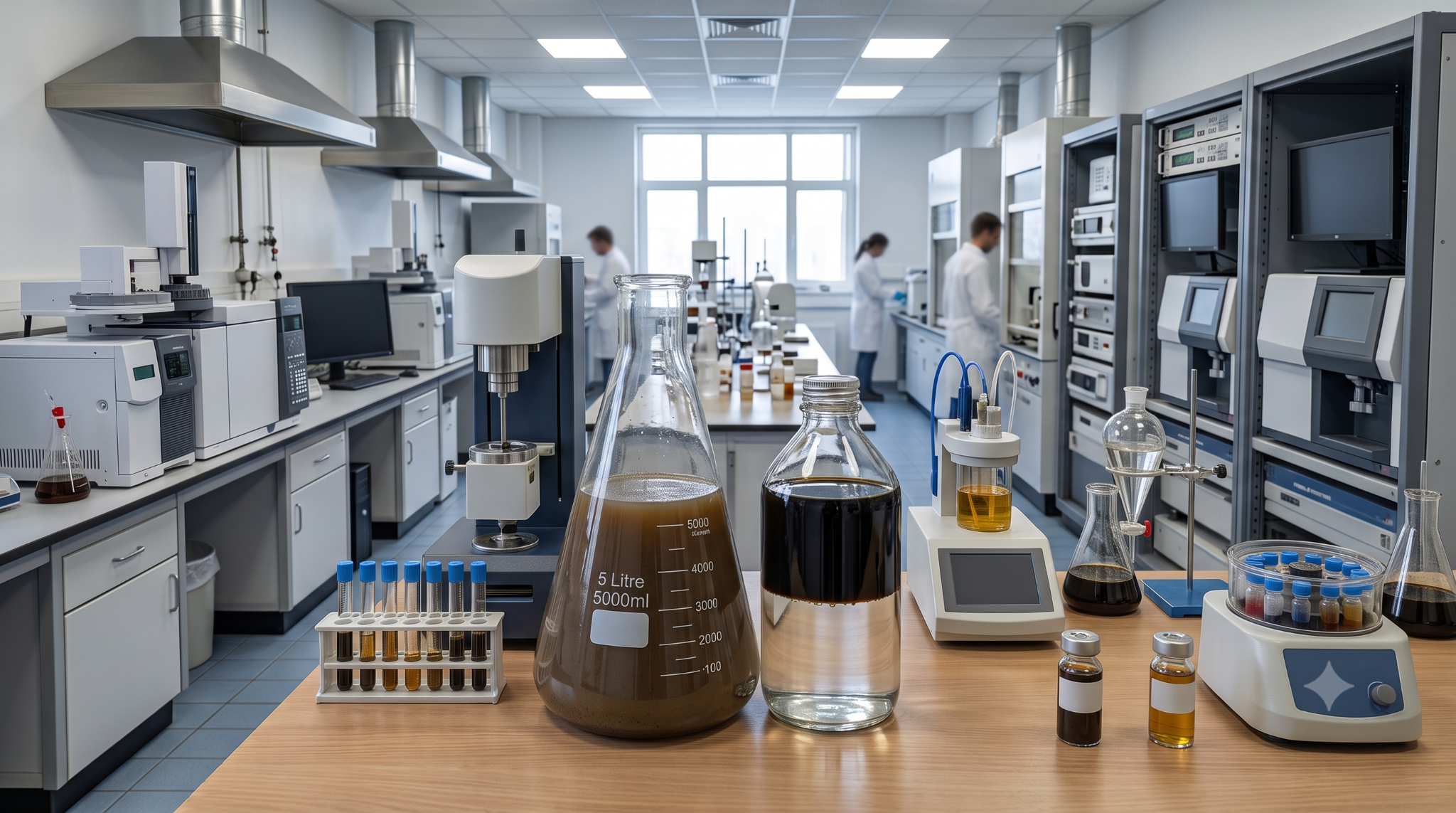
Illustrative crude emulsion screening in the laboratory.

01

Adsorb at the interface

Demulsifier molecules reach the boundary between oil and water and compete with the film stabilizing each droplet.

02

Weaken the droplet film

The protective layer becomes easier to drain and rupture when droplets collide.

03

Let phases separate

Coalesced water droplets grow and settle; equipment and residence time finish the separation.

Mechanism is simplified for illustration; actual behavior depends on crude, water, solids, shear and treatment conditions.

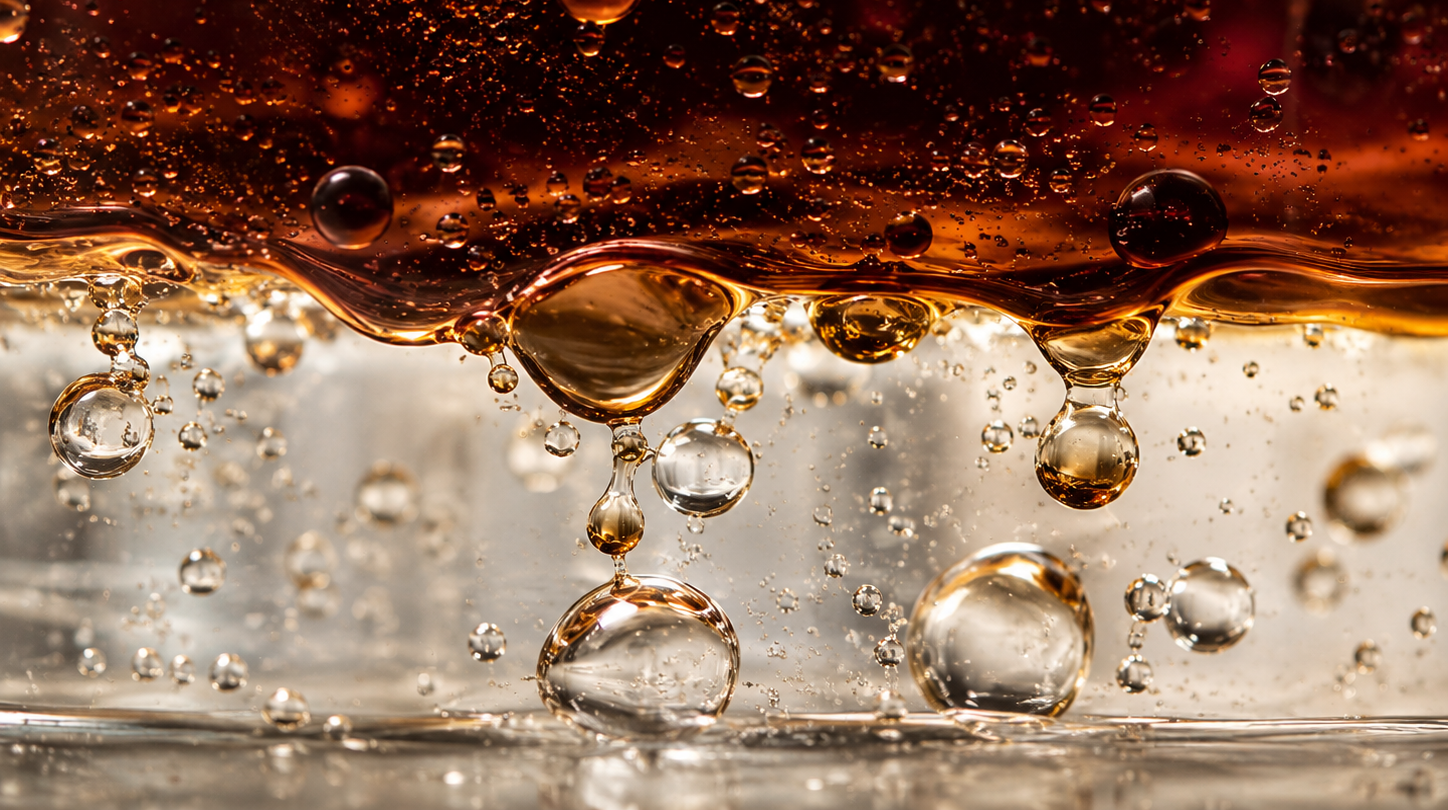
Inside the emulsion

Where water meets oil.

Fine water droplets can remain dispersed in crude when naturally occurring interfacial materials and production shear stabilize the emulsion. Treatment screening focuses on releasing those droplets while preserving the quality of the separated water.

Conceptual imagery; performance must be assessed using representative field samples.

Demulsifiers

Oil–water interface, illustrative visualization.

START WITH THE CONTINUOUS PHASE

Two emulsion problems. Two treatment routes.

WATER IN OIL · W/O

Crude-oil demulsification

Water droplets dispersed in an oil continuous phase

Goal: reduce basic sediment and water (BS&W), speed water drop, limit rag layers and support downstream desalting.

Typical locations: wellhead or flowline, production separator, heater treater, electrostatic dehydrator and refinery desalter.

Formulation direction: oil-dispersible or suitably formulated interfacial actives; choose solvent/carrier and injection location for delivery and compatibility.

OIL IN WATER · O/W

Produced-water clarification

Oil droplets dispersed in a water continuous phase

Goal: reduce dispersed oil and suspended matter in water before flotation, filtration, reuse, injection or discharge.

Typical locations: produced-water train, hydrocyclone outlet, induced-gas flotation and polishing stages.

Formulation direction: water-compatible reverse demulsifier, coagulant or flocculant selected against actual water chemistry and treatment equipment.

Terminology: “Reverse demulsifier” is widely used for oil-in-water treatment. A conventional W/O demulsifier should not be assumed suitable for produced-water clarification.
Technical options

Three demulsifier chemistry routes

Select a chemistry against the actual crude emulsion, water quality and treatment conditions. These platforms can be screened separately or as components of a tailored blend.

01 / POLYETHER CHEMISTRY

EO/PO

Ethylene oxide and propylene oxide polyethers tune the oil–water interface to encourage dispersed water droplets to merge and settle.

Used in
Crude dehydration, primary separation and multi-active demulsifier blends.
Fit for
EO/PO balance, cloud behavior, brine tolerance, temperature, solubility and oil carryover.
02 / AMINE CHEMISTRY

Alkoxylated
Amines

Alkoxylated amine structures provide a complementary interfacial response when persistent crude emulsions require a different treatment route.

Used in
Crude dehydration, difficult interfacial films and tailored demulsifier blends.
Fit for
Dosage response, oil and water quality, compatibility and phase-separation behavior.
03 / POLYAMINE CHEMISTRY

Polyamines

Polyamine-based chemistry offers another screening route for challenging oil–water interfaces and selected produced-water treatment programs.

Used in
Blend screening, emulsion treatment and produced-water clarification where appropriate.
Fit for
Water chemistry, downstream compatibility, oil carryover and the target separation process.
Choose the treatment through bottle tests on representative field samples. Chemistry family alone does not establish performance.
Where it is used

Across the production and processing train

Wellstream / flowline → Primary separator → Heater treater → Electrostatic dehydrator → Export crude / desalter

01

Upstream separation

Early chemical contact gives the active time to distribute before the vessel. Injection must provide mixing without excessive downstream shear.

02

Heavy and viscous crude

Temperature, dilution strategy, solids and residence time become particularly important alongside chemistry.

03

Produced-water train

Water clarification may need a separate chemical and a distinct injection point to meet oil-in-water targets.

Production-plant screening considers injection point, mixing, residence time and both separated phases.

From lab to field

A practical selection workflow

1

Characterize the fluids

Record oil and water rates, water cut, crude density/viscosity, brine salinity, pH, solids, temperature, current chemicals and residence time.

2

Screen in bottle tests

Use fresh representative emulsion at operating temperature. Compare a blank and a range of candidate products and dose levels under consistent mixing.

3

Measure both phases

Track water drop versus time, residual BS&W, interface/rag layer, water clarity and oil-in-water as applicable.

4

Validate in the plant

Adjust dose and injection point while monitoring export oil, separated water and stable operation over changing field conditions.

Bottle-test visual

Untreated
Treated

Illustrative untreated and treated bottle comparison

Conceptual illustration only; it is not experimental performance data.

Performance scorecard

Water drop

Volume separated at defined time points

Dry oil

Residual water and sediment in treated crude

Clean water

Oil content and clarity of the aqueous phase

Stable interface

Minimal rag layer, solids accumulation and re-emulsification

Dosage guidance: no universal ppm dose is technically reliable. Calculate dosage against the agreed basis (total produced liquid, crude oil, or produced water), screen a practical range in the lab, and confirm against actual flow rates in the field.
Bottle-test concept

See the separation.

Cementing crew and pump equipment at an onshore wellsite in warm evening light
Illustrative comparison of an emulsion before and after treatment. Image is conceptual, not a measured test result.
Problem solving

What to check when separation is poor

Slow water drop

Check temperature, emulsion age, dose, distribution, residence time and whether shear downstream of injection is creating finer droplets.

Persistent rag layer

Investigate fine solids, asphaltenes, wax, incompatible chemicals and the balance between fast drop and clean interface.

Oily separated water

Review overdosing, phase partitioning, separator hydraulics and whether a dedicated produced-water clarifier is needed.

Variable field results

Sample different wells and operating conditions; mixed crude streams can respond differently from a single-well bottle test.

High residual salt

Assess entrained brine, wash-water mixing and desalting conditions in addition to crude dehydration.

Low-temperature treatment

Check product pumpability, carrier compatibility and slower coalescence kinetics at the actual operating temperature.

FREQUENTLY ASKED QUESTIONS

Demulsifier FAQs.

Technical guidance for understanding demulsifier chemistry, crude-oil dehydration, produced-water clarification, separation performance and field treatment evaluation.

No. A demulsifier targets liquid–liquid oil/water emulsions; a defoamer targets gas bubbles and foam. A system may need both.

Performance changes with crude composition, produced water, solids, temperature, shear and other chemicals. Representative sample screening is essential.

No. Excess dose can increase treatment cost and may worsen water quality or destabilize the desired interface. Choose the lowest effective field dose based on both oil and water specifications.

No. It works alongside mixing, heat, settling time and, where installed, electrostatic coalescence and water-polishing equipment.

An oil demulsifier is screened to release dispersed water from crude oil. A reverse demulsifier or water clarifier is screened to remove dispersed oil from the separated water. Some facilities require separate treatments for both phases.

Potential injection points include upstream flowlines, the inlet to a production separator, heater treaters and crude dehydration equipment. The choice depends on mixing, residence time, temperature and the point where the emulsion forms.

Begin with a bottle-test dose series using a representative sample. Compare water-drop rate, residual water in oil, interface quality and separated-water clarity, then confirm a suitable dose under field conditions.

They can be evaluated for heavy crude, but viscosity and stable interfacial films may slow separation. Screening should reflect the actual temperature, dilution and residence time of the production system.

Temperature changes crude viscosity and droplet movement, while brine chemistry can change the interface and treatment response. Bottle tests should use the expected operating temperature and produced-water composition.

Record the amount and speed of water drop, rag-layer thickness, remaining water and salt in oil, and oil carryover in the water phase. A successful program must meet both oil and water quality targets.

Have a difficult emulsion?

Share a representative crude and produced-water sample, current treatment conditions and the target oil and water specifications. We can structure a comparative bottle-test program and propose a suitable treatment route.

Contact EXPLORAX ↗