

Antifoam
FOAMSTAB spans EO/PO polyethers, organic and resin routes, silicone and siloxane systems, and fluorosilicone technologies for oilfield foam control and fluid handling.
Find the right foam control chemistry.
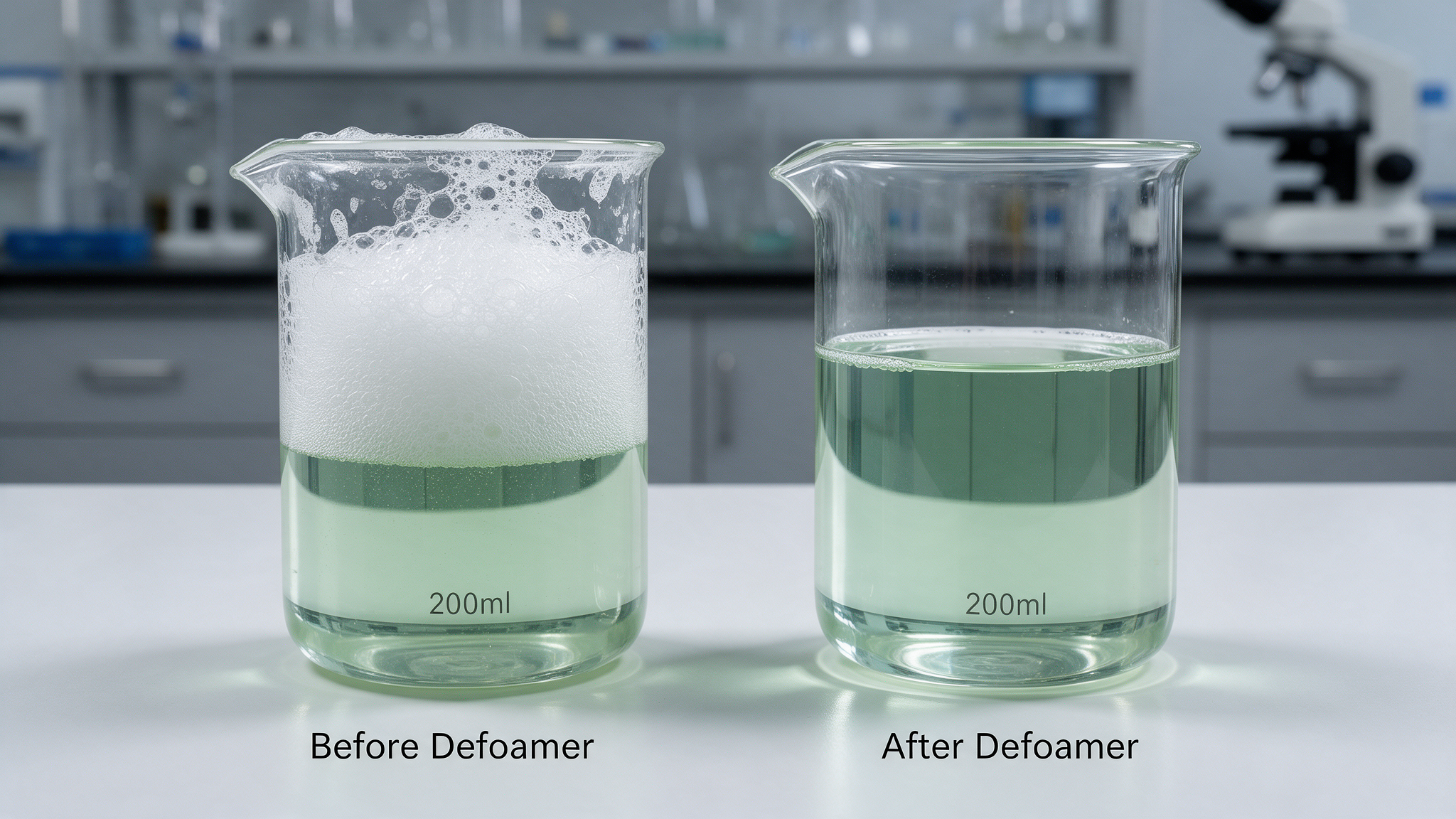
Foam can disrupt mixing, pumping, density measurement and process handling. FOAMSTAB grades provide a starting point for matching foam control chemistry to the fluid and process stage. Selection must account for surfactants, solids, salinity, shear and downstream compatibility.
Choose a chemistry route.
FOAMSTAB groups oilfield foam-control candidates by chemistry. Each window shows the chemistry and grade references; open it to compare the available and development concepts.
EO/PO Polyethers
EO/PO polyethers · high molecular weight polyethylene–polypropylene copolymers
E-1010 · E-6100 · EO-6100 · EPO-400
VIEW 4 GRADE REFERENCES ↗Organic & Resin Routes
Ethoxylated alkylphenol resin · ethoxylated arylphenol resin · polyamine alkoxylates · silicone-free
RA-100 · RF-200 · PM-300 · PA-100 + others
VIEW 9 GRADE REFERENCES ↗Silicone & Siloxane
PDMS / hydrophobic silica · modified siloxane · silicone–glycol
S-100 · S-30 · OM-10 · SG-10
VIEW 4 GRADE REFERENCES ↗Fluorosilicone
Solvent-carried · neat fluid · water-dispersible emulsion
FS 880 · FS 950 · FS 330
VIEW 3 GRADE REFERENCES ↗How defoamers act at the foam film.
A suitable defoamer reaches the air–liquid interface, enters the thin foam film and encourages bubble rupture. The result depends on dispersibility, film chemistry, mixing energy and the full fluid formulation.
Foam forms
Air entrainment and surface-active components stabilize bubbles during mixing or circulation.
Defoamer disperses
Well-selected droplets or active species reach the foam films without causing unacceptable defects.
Films collapse
Bubbles rupture and foam volume can fall. Persistence and compatibility require application testing.
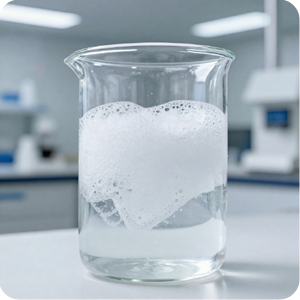
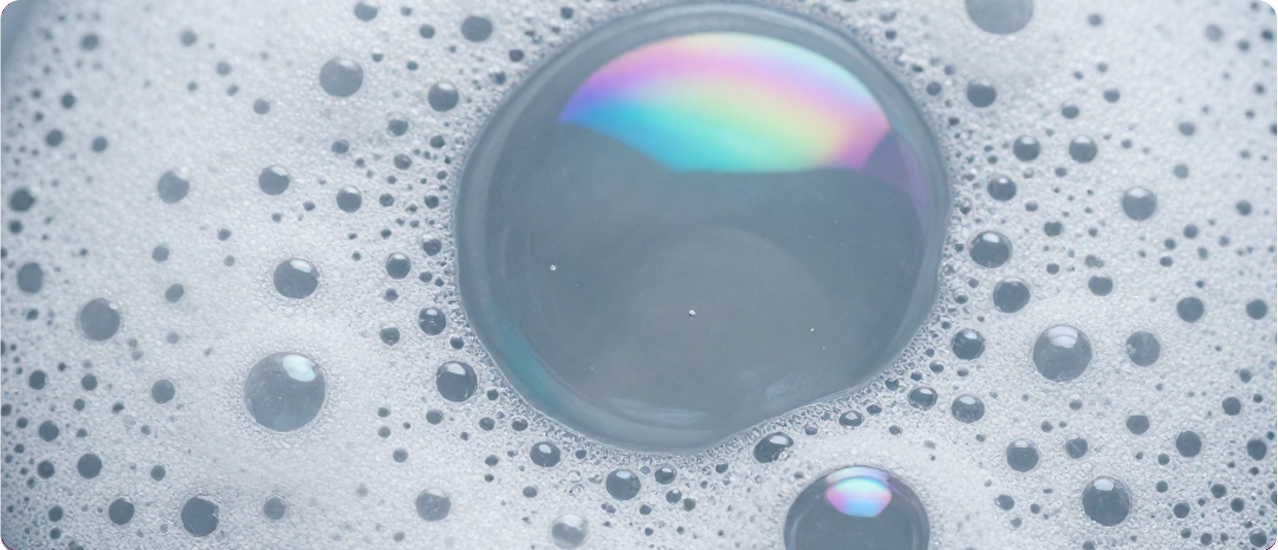
Foam structure in a laboratory fluid, illustrative image.
One foam problem. Four very different fluids.
The useful chemistry changes as the fluid changes. Compare candidates in the actual drilling mud, cement slurry, stimulation fluid or produced-fluid circuit.
Drilling fluid that stays manageable.
Where foam causes trouble
Agitation, solids and surfactants can sustain surface foam and entrained air in water-based muds.
Screen for: Screen foam height, air release, mud density, rheology and filtration after treatment.
Choose a chemistry after testing the actual fluid and checking downstream effects.

Control air before the slurry enters the well.
Where foam causes trouble
Entrained air during cement mixing can interfere with slurry density control and consistent pumping.
Screen for: Measure air release and density together with rheology, free fluid, thickening time, fluid loss and compressive strength.
Choose a chemistry after testing the actual fluid and checking downstream effects.

Clear foam in the treatment fluid.
Where foam causes trouble
Surfactants, agitation and returned treatment fluids can produce unwanted foam during fluid preparation and handling.
Screen for: Compare fresh and spent fluids; check breaker action, friction profile, proppant transport and flowback compatibility before selecting a defoamer.
Choose a chemistry after testing the actual fluid and checking downstream effects.

Help separators and process fluids release gas.
Where foam causes trouble
Crude separation, gas handling, amine treating and glycol circulation can present different foam challenges.
Screen for: Test with circulating plant fluid and check separation time, carry-over, filtration and downstream oil/water quality.
Choose a chemistry after testing the actual fluid and checking downstream effects.

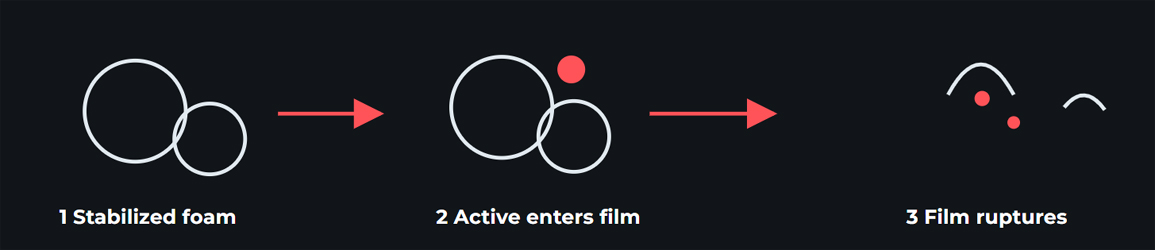
Conceptual mechanism. Actual defoaming depends on the fluid recipe, temperature, mixing energy and dosage.
See the desired breaking profile.
The red curve illustrates a possible trend for a starch-based fluid whose viscosity responds to amylase treatment. It is conceptual and is not measured BIOBREAKER S-3100 data. Some starch cleanup systems require other endpoints.
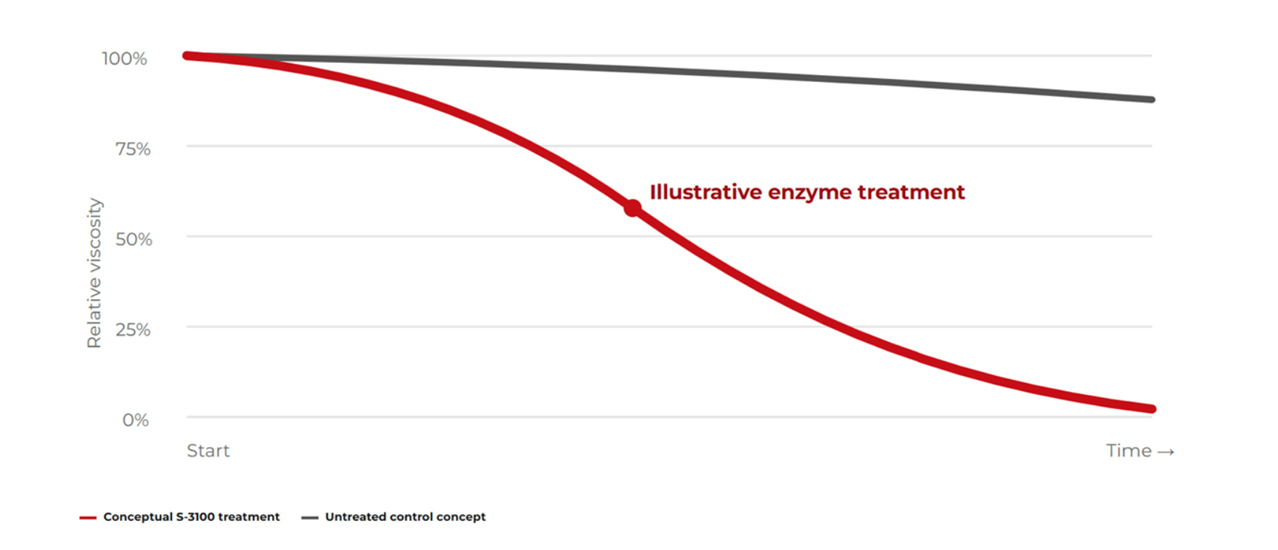
Normalized illustration with no time or dose claims. Request measured application data or run a sample-fluid screening study.
Screen in your process fluid.
Define the fluid
Surfactants, solids, brine, pH, temperature and mixing conditions.
Compare grades
Compare the four chemistry routes for dispersibility and process compatibility.
Measure foam
Record knockdown, rebound and persistence against an untreated control.
Check side effects
Verify density, separation, residue and downstream compatibility.
FOAMSTAB FAQs.
Technical guidance for understanding FOAMSTAB chemistry, foam-control routes, application compatibility, dosage and laboratory evaluation.
It is a set of oilfield foam-control and fluid-separation chemistry options. The preferred route depends on the fluid formulation and process objective.
E-6100 is the PO-rich EO/PO cementing grade linked from the first window. Its current TDS should be used for product-specific properties.
The four windows group EO/PO, organic and resin, silicone/siloxane, and fluorosilicone routes. The organic group also includes resin and polyamine concepts. Confirm the available grade and its compatibility before specification.
Relevant grades can be evaluated for cementing, but test foam, density and slurry properties in the complete cement system.
Determine dosage from a dose-response study in the actual fluid. Overdosing can create side effects and may not improve control.
Knockdown describes how quickly existing foam collapses. Persistence describes how well foam remains controlled during continued mixing or aeration.
They can alter dispersibility and foam stability. Test at the expected brine composition and operating temperature.
Use identical fluid batches, vessel geometry, aeration and mixing, temperature and timing. Include an untreated control and record both initial and rebound foam.
Email info@geoconproducts.com with the fluid recipe, process stage, temperature, salinity, current foam problem and the test method used.
Find your FOAMSTAB grade.
Share your fluid composition, brine, temperature, mixing conditions and foam-control target. Our team can suggest grades for comparative testing.
Contact EXPLORAX ↗