

BIOBREAKER S-3100 is an amylase focused enzyme option for starch-containing oilfield fluids and compatible cleanup applications.
A polymer
platform for
spacer design.
Starch-based additives can contribute to viscosity and residue in drilling, completion or cleanup fluids. After their function is complete, S-3100 may help hydrolyse accessible starch chains when compatible with the complete fluid and operating conditions.
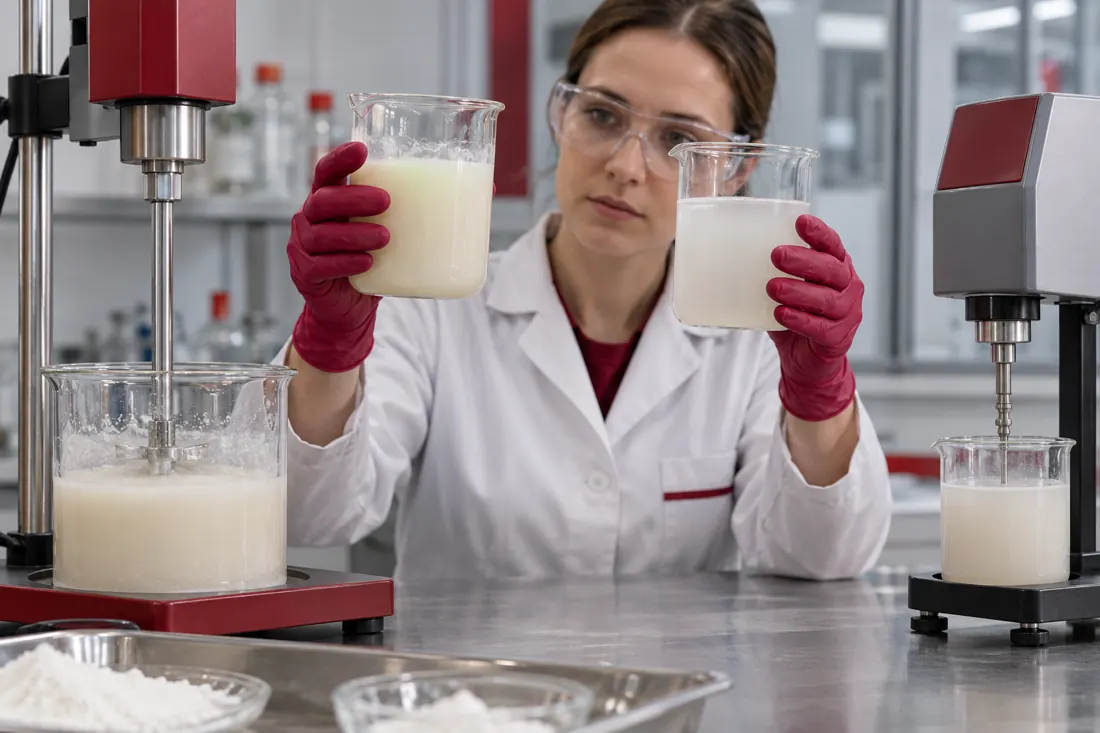
Targeting starch residues.
Amylase enzymes hydrolyse accessible α-linked starch chains. The reduction in viscosity or residue depends on starch type, loading, fluid additives and test conditions.
Build viscosity
Hydrated guar provides the required fluid structure during placement.
Introduce breaker
Screen S-3100 against the actual starch-containing fluid and additives.
Confirm cleanup
Record viscosity reduction and inspect residue at representative temperature.
See the desired breaking profile.
The red curve illustrates a possible trend for a starch-based fluid whose viscosity responds to amylase treatment. It is conceptual and is not measured BIOBREAKER S-3100 data. Some starch cleanup systems require other endpoints.
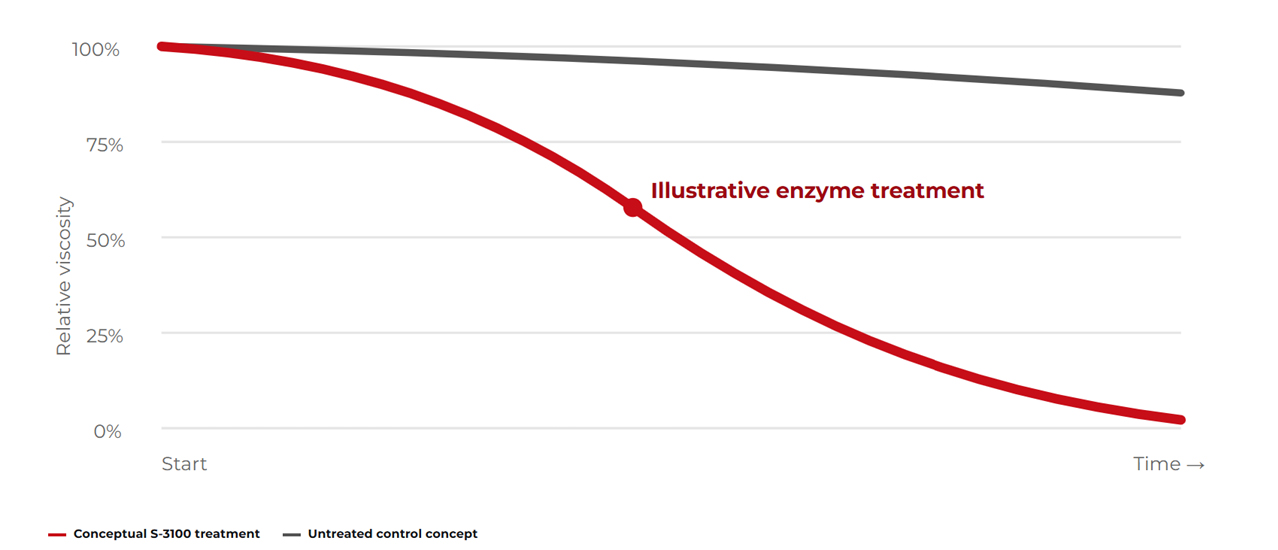
Normalized illustration with no time or dose claims. Request measured application data or run a sample-fluid screening study.
Screen in your fluid.
Define the system
Starch source and concentration, salinity and complete additive list.
Match conditions
Temperature, pH and actual brine composition.
Measure the break
Viscosity versus time with untreated and dosage controls.
Check cleanup
Residual material, compatibility and field handling.
BIOBREAKER S-3100 FAQs.
Technical guidance for understanding BIOBREAKER S-3100, starch degradation, formulation compatibility, dosage and laboratory evaluation.
It is an amylase focused option for accessible starch in oilfield fluid systems. Identify the starch type and confirm performance in the complete formulation.
It is positioned for starch. Guar is addressed by BIOBREAKER G100 and xanthan by BIOBREAKER X200; blended fluids need a tailored screening plan.
It may be considered as part of a filter-cake cleanup evaluation when starch is present. Test the complete filter cake, including other polymers, bridging solids and fluid additives.
Enzyme access can change with starch modification and formulation. Run a bench test using the actual grade and the intended treatment conditions.
Set dosage from laboratory response in the representative fluid. Starch concentration, brine, pH, temperature and target cleanup time all influence the result.
They affect amylase activity and stability. Test at the intended operating temperature and measured pH, with the full fluid composition.
Measure viscosity where relevant and assess starch conversion or remaining residue with an appropriate analytical method; include an untreated control.
A multi-enzyme approach may be suitable for mixed polymers, but compatibility and activity of each component should be checked in the final formulation.
Email info@geoconproducts.com with the starch type, loading, other polymers, brine, pH, temperature and target cleanup window.
Evaluate S-3100 for your fluid.
Send polymer loading, brine, pH, temperature, additive package and target break time. Our team can propose a laboratory screening route.
Contact EXPLORAX ↗